
MySafeTherapy Is Heading to Web Summit Lisbon 2025
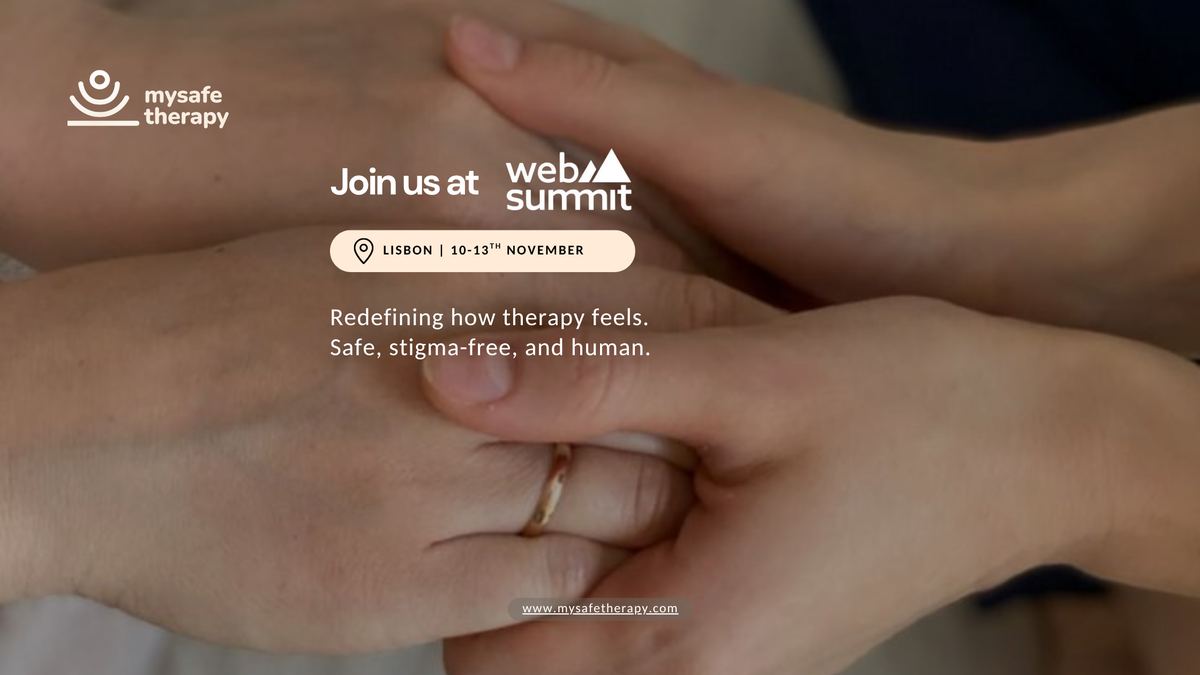
Most mental health platforms look the same. A login screen, a calendar, a video call. What they miss is the one thing people actually need when they seek help: a space that feels emotionally safe.
MySafeTherapy was built to change that. It is a digital therapy platform designed for people who hesitate to choose therapy because they fear being judged, misunderstood, or forced into a format that does not feel natural.
This November, we're taking that mission from the UK to one of the largest global tech stages—Web Summit Lisbon 2025, where 70,000+ founders, investors, policymakers, and innovators gather to discuss what's next for the world.
📍 Web Summit, Lisbon 📅 10–13 November 2025 🇬🇧 Representing London's health innovation ecosystem
What MySafeTherapy Offers
- 1:1 chat therapy for those who open up better in writing
- Video and audio therapy for people who want real conversation
- Avatar-based therapy for users who need emotional distance before vulnerability
- Self-guided calming tools to help regulate stress and anxiety
Why Web Summit?
Web Summit is where technology meets policy. For mental health to move forward, it needs to be part of the global innovation conversation—not on the sidelines.
The mental health technology sector has grown rapidly. According to Grand View Research (2023), the global mental health apps market was valued at $5.2 billion in 2022 and is projected to grow at a compound annual growth rate (CAGR) of 16.5% through 2030. Investment in digital mental health startups exceeded $2 billion in venture capital in 2021 alone (Rock Health, 2022).
Yet scale hasn't solved the fundamental problem. Engagement rates for mental health apps remain low—a study by Baumel et al. (2019) in the *Journal of Medical Internet Research* found that the median 15-day retention rate for mental health apps was just 3.9%. Most people download, try once, and leave.
The platforms that will succeed are those that understand the difference between accessibility and emotional safety. You can make therapy available 24/7, but if people don't feel safe using it, access means nothing.
Why It Matters Now
The pandemic reshaped attitudes toward mental health—but it also exposed deep structural failures:
- NHS England reported a record 4.6 million referrals to mental health services in 2022–23, with many patients waiting over 12 weeks for treatment
- The Mental Health Foundation found that 74% of UK adults felt so stressed at some point in the past year that they felt overwhelmed or unable to cope (2023 survey)
- Deloitte estimated the annual cost of poor mental health to UK employers at £51 billion in 2022, up from £45 billion in 2019
Technology alone won't solve this. But technology designed with genuine care—built around how people actually feel when they're struggling—can bridge the gap between wanting help and getting it.
We're there to connect with investors who believe in human-first technology, partner with organisations expanding employee wellbeing, and share our approach with founders building for the future of care.
The Mission Stays the Same
Whether it's London or Lisbon, the goal remains: make therapy feel human, private, and genuinely supportive. Technology should serve the person, not the other way around.
We believe the future of therapy is one where no one has to choose between convenience and connection. That's what we're building.