Understanding the Difference Between Situational and Clinical Depression

Depression is often used as a broad term, but not all depression is the same. Two commonly misunderstood forms are situational depression and clinical depression. The difference matters because the cause, duration, symptoms, and treatment approach vary significantly.
The most important thing to remember is this: depression is treatable, and therapy can change the trajectory of how it impacts your life, relationships, and ability to function.
What is Situational Depression?
Situational depression—formally known as adjustment disorder with depressed mood in the DSM-5-TR (Diagnostic and Statistical Manual of Mental Disorders, 5th Edition, Text Revision, 2022)—is triggered by identifiable external events. It does not appear without context.
DSM-5-TR Diagnostic Criteria for Adjustment Disorder
The DSM-5-TR specifies that adjustment disorder involves: - Emotional or behavioural symptoms developing within 3 months of an identifiable stressor - Symptoms that are out of proportion to the severity of the stressor (accounting for cultural and contextual factors) - Significant impairment in social, occupational, or other functioning - Symptoms do not meet criteria for another mental disorder and are not an extension of a pre-existing condition - Once the stressor or its consequences have ended, symptoms do not persist for more than 6 months
Common Triggers
- Death of a loved one
- Divorce, separation, or relationship breakdown
- Job loss or career setbacks
- Financial instability or housing insecurity
- Moving to a new place or country
- Chronic illness diagnosis (in self or loved one)
- Family conflicts or estrangement
Prevalence
Adjustment disorders are common but under-researched compared to major depression. A systematic review by O'Donnell et al. (2019) in *European Journal of Psychotraumatology* estimated prevalence rates of 2–8% in community samples and up to 12–25% in clinical settings, particularly in medical populations facing serious illness.
Situational depression is typically shorter in duration and resolves as you process the event and adapt. Therapy—particularly brief psychodynamic therapy or problem-solving therapy—can significantly accelerate this process.
What is Clinical Depression?
Clinical depression, formally Major Depressive Disorder (MDD), is a medical condition that persists regardless of external circumstances and often involves neurobiological changes.
DSM-5-TR Diagnostic Criteria for MDD
A diagnosis of MDD requires five or more of the following symptoms present during the same 2-week period, representing a change from previous functioning. At least one symptom must be either (1) depressed mood or (2) loss of interest or pleasure:
- Depressed mood most of the day, nearly every day
- Markedly diminished interest or pleasure in all or almost all activities
- Significant weight loss or gain, or change in appetite
- Insomnia or hypersomnia nearly every day
- Psychomotor agitation or retardation observable by others
- Fatigue or loss of energy nearly every day
- Feelings of worthlessness or excessive guilt
- Diminished ability to think, concentrate, or make decisions
- Recurrent thoughts of death, suicidal ideation, or suicide attempt
Prevalence Data
- The National Institute of Mental Health (NIMH) estimates that 8.3% of US adults (21 million people) experienced at least one major depressive episode in 2021
- In the UK, the NHS Digital 2014 survey found lifetime prevalence of depression at approximately 10% of adults, with higher rates among women, younger adults, and people living in deprivation
- The WHO ranks depression as the leading cause of disability worldwide, contributing more to the global burden of disease than any other mental health condition (GBD 2019)
Neurobiology
Clinical depression involves measurable changes in brain function. Research using neuroimaging has identified: - Reduced hippocampal volume in people with recurrent depression (Videbech & Ravnkilde, 2004, *American Journal of Psychiatry*) - Dysregulation of the HPA axis (hypothalamic-pituitary-adrenal axis), leading to elevated cortisol levels - Altered serotonin, norepinephrine, and dopamine signalling—though the "chemical imbalance" model is now understood as an oversimplification of a more complex neurobiological picture
How Therapy Helps Both
Whether your depression is situational or clinical, therapy provides essential support, but the approach may differ.
For Situational Depression
Therapy helps you process the triggering event, develop coping strategies, and prevent it from developing into something more persistent.
NICE guideline CG91 recommends: - Active monitoring for mild symptoms (watchful waiting with follow-up) - Low-intensity psychological interventions such as guided self-help or computerised CBT - Brief psychological therapy (6–8 sessions) if symptoms persist
For Clinical Depression
Therapy works alongside medication to address thought patterns, build resilience, and develop long-term management strategies.
NICE guideline CG90 recommends: - CBT or behavioural activation for moderate-to-severe depression (16–20 sessions) - Combined therapy and antidepressant medication for severe or recurrent depression - Mindfulness-based cognitive therapy (MBCT) for preventing relapse in those with 3+ previous episodes (recommended by NICE since 2009)
A meta-analysis by Cuijpers et al. (2020) in *World Psychiatry* found that the combination of psychotherapy and pharmacotherapy was significantly more effective than either alone, with a combined effect size of g = 0.82.
When to Seek Help
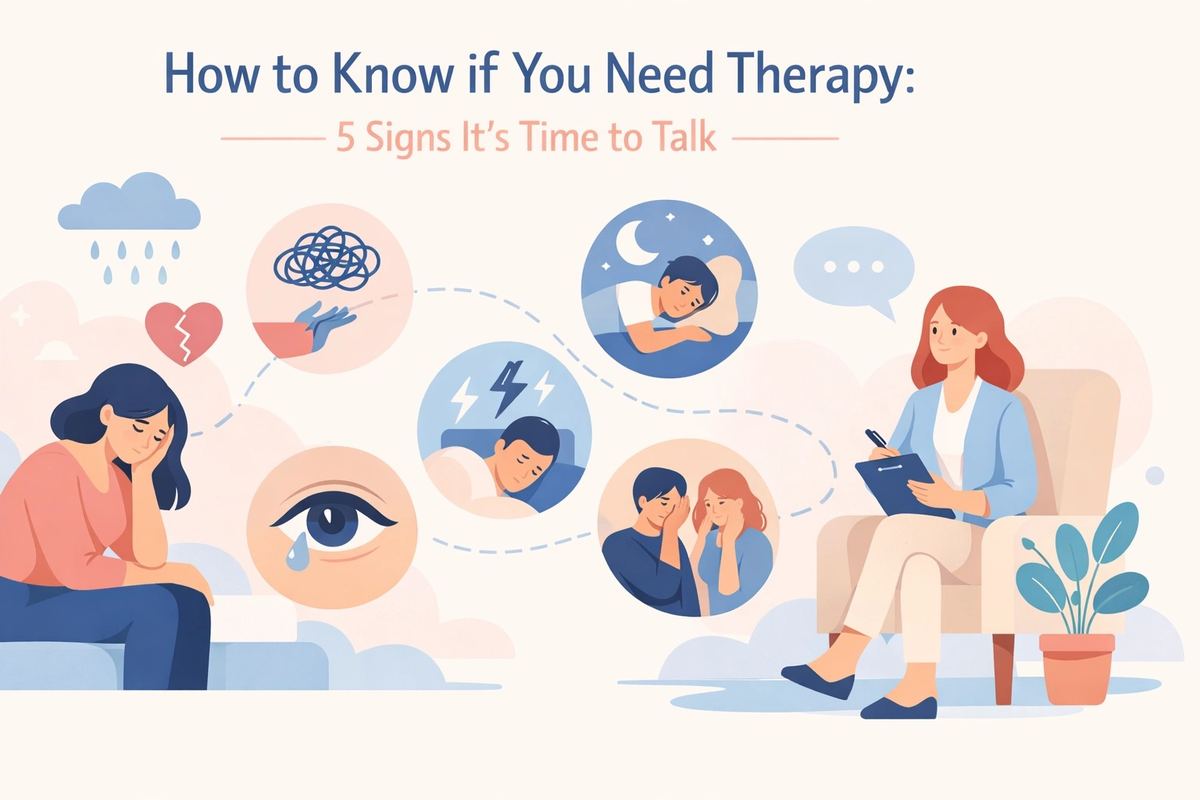
If you've been feeling persistently low, disconnected, or unable to function for more than two weeks, it's worth speaking to a professional. You don't need to wait for a crisis.
Early intervention matters. A study by Ghio et al. (2014) in *Psychiatry Research* found that the average delay between onset of depression and first treatment contact was 6–8 years, during which the condition often worsened and became more treatment-resistant.
If you're unsure, you can take the PHQ-9 as a self-screening tool. A score of 10 or above suggests moderate depression and warrants clinical assessment.