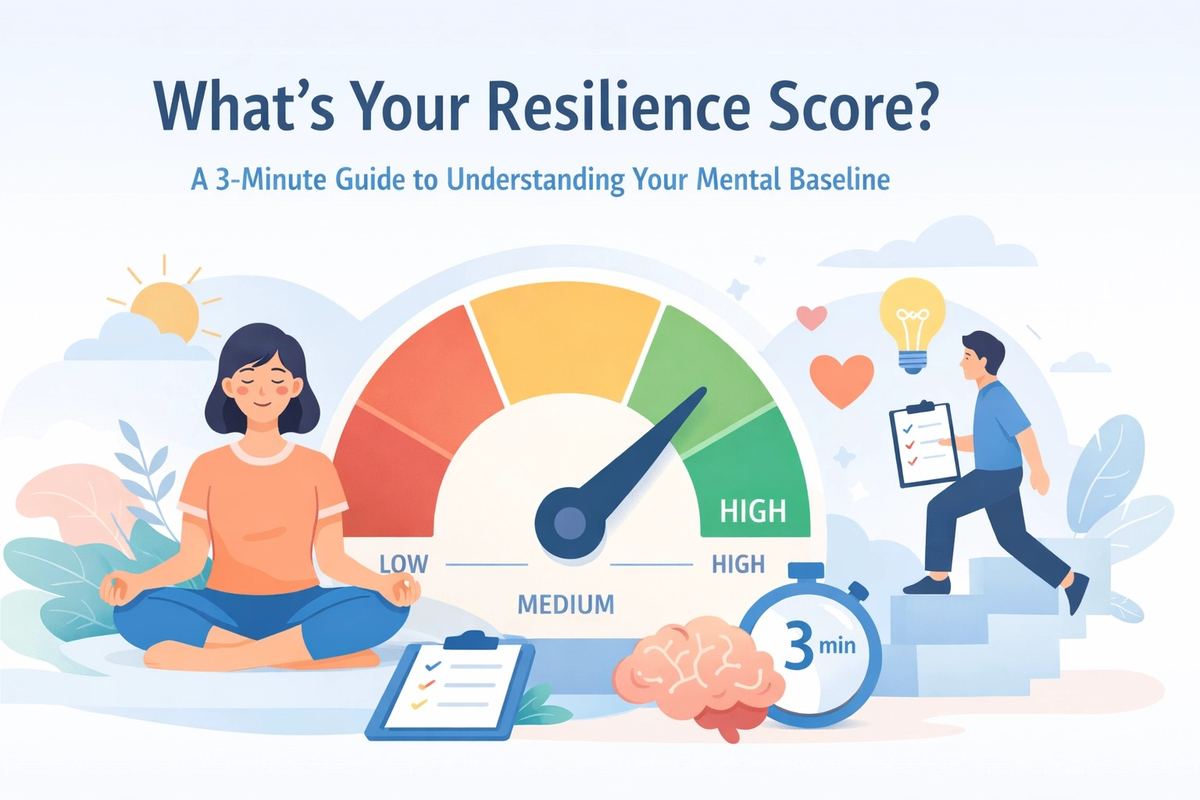
What's Your Resilience Score? A 3-Minute Guide to Understanding Your Mental Baseline
It's 9:00 PM on a Tuesday. You've just finished dinner, the laptop is (finally) closed, and you're sitting on the sofa. You should be relaxing, but instead, you feel a strange, heavy kind of "drained." It isn't the kind of tired that a good night's sleep fixes; it's the kind that makes the thought of tomorrow morning feel like climbing a mountain in flip-flops.
We've all been there. But lately, you might be wondering: Is this just a bad week, or am I running on empty?
In the world of psychology, we talk a lot about "resilience." It's a bit of a buzzword, often used by HR departments to suggest we should just "tough it out." But at its core, resilience isn't about being a superhero.
When you're struggling, "resilience" often isn't what you feel. Sometimes you just feel tired. Flat. Heavy. And that's exactly where a Resilience Score can help—by putting language (and a baseline) on what's going on, so you're not left assuming you're simply failing to cope.
Resilience is your mental baseline: your psychological capacity to cope with challenges, bounce back from setbacks, and keep your head above water when the tide gets high.
The good news? Your resilience isn't a fixed number you're born with. It's more like a "Resilience Score": a metric that shifts based on your environment, your habits, and the tools you have in your kit.
What Exactly is a Resilience Score?

Think of your resilience as the shock absorbers on a car. If the road is smooth, you don't notice them. But when you hit a pothole—a difficult feedback session at work, a family argument, or even just the cumulative grind of managing stress in high-pressure roles—those shock absorbers determine whether you keep driving or end up with a broken axle.
A Resilience Score is a way to quantify how well those shock absorbers are working right now. Clinical researchers use tools like the Brief Resilience Scale (BRS) or the Connor-Davidson Resilience Scale (CD-RISC) to measure this. They look at things like your adaptability, your social support, and your ability to maintain a sense of perspective.
Knowing your score isn't about judging yourself. It's about understanding your starting point so you can decide what kind of support you actually need.
The Resilience Spectrum: Where Do You Sit?
Research suggests that about one-third of people currently score "low" on resilience scales. If that's you, it doesn't mean you're weak; it means your current "load" is heavier than your "capacity."
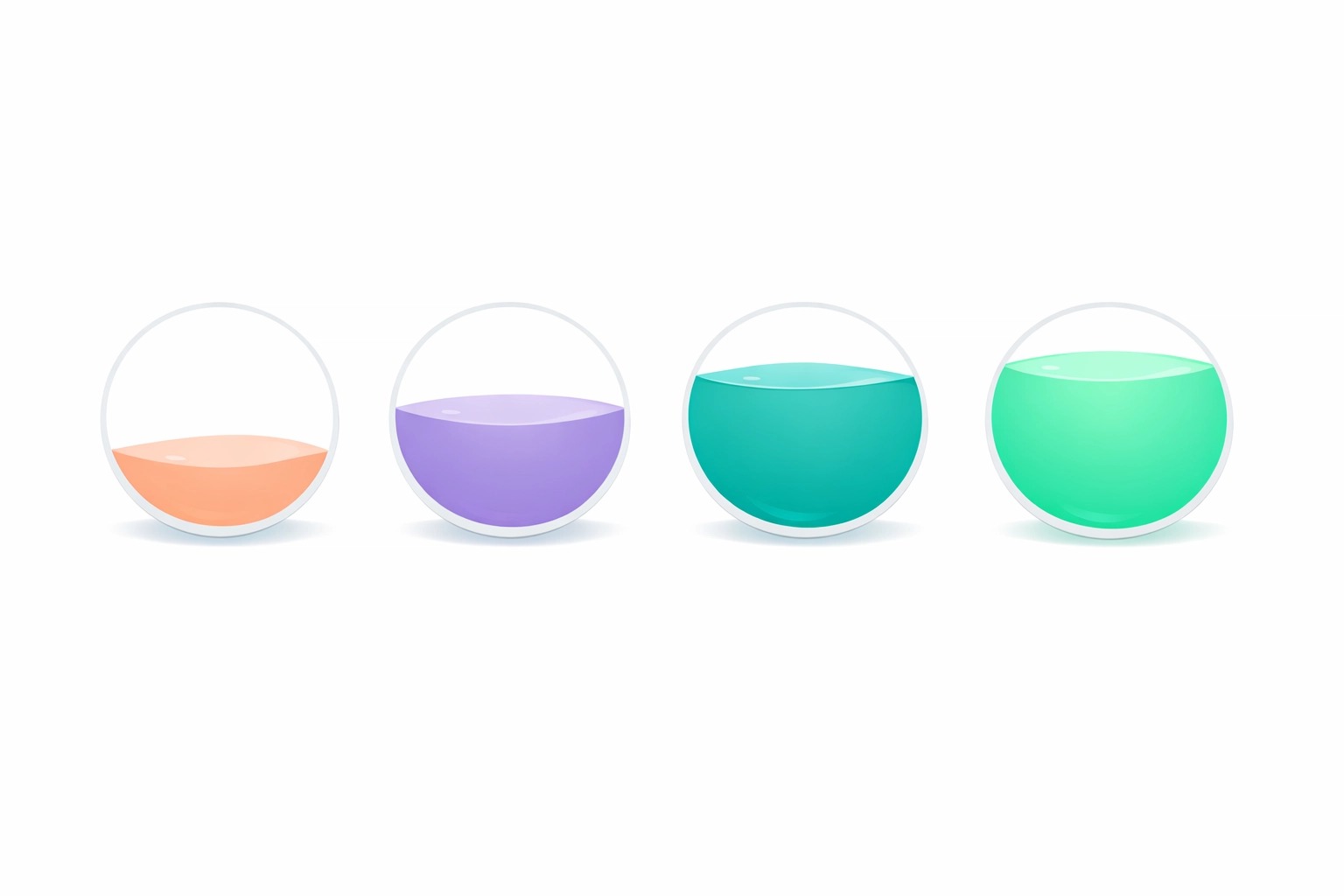
Based on established clinical frameworks, we can generally break down resilience scores into four main categories:
- 0–37: Developing — You feel constantly overwhelmed. Small inconveniences feel like major crises. Your internal resources are depleted. You need active recovery and likely professional support.
- 38–43: Established — You're managing, but you have "bad days" that linger for a week. You're prone to "Sunday Scaries." You have a foundation, but your coping mechanisms are being stretched thin by daily stress.
- 44–48: Strong — You can navigate a tough work week and still find energy for your personal life. You have healthy habits and a solid perspective. You view setbacks as temporary hurdles.
- 49–60: Exceptional — You thrive under pressure and can support others without burning out. You are highly adaptable and possess a wide range of psychological tools.
Why Your "Workplace Resilience" Matters
For most of us, work is the primary drain on our resilience battery. It's rarely one big disaster that breaks us; it's the "micro-stresses." It's the constant Slack notifications, the shifting deadlines, and the feeling of being "on" 24/7.
When your resilience score is low, your brain moves into a state of "survival mode." In this state, your prefrontal cortex (the part of your brain responsible for logic and decision-making) takes a backseat to your amygdala (the part responsible for fear and "fight or flight").
This is why, when you're burnt out, a simple email from your boss can feel like a personal attack. Understanding your baseline helps you realize that the email isn't the problem: your depleted resilience score is.
3 Minutes to Check Your Baseline
While a full clinical assessment takes longer, you can get a "gut check" of your resilience right now by asking yourself these four questions:
- How long does it take me to "switch off" after a stressful event? (Minutes? Hours? Days?)
- When things go wrong, is my first thought "How can I fix this?" or "Why does this always happen to me?"
- Do I feel like I have a "buffer" of energy, or am I living paycheck-to-paycheck emotionally?
- When I'm stressed, do I reach out to people or do I withdraw and isolate?
If your answers lean toward the "long switch-off" and "isolation" side of things, your score is likely in the "Developing" or "Established" range.
How to Boost Your Score (Without Adding to Your To-Do List)
The worst advice for someone with low resilience is "just do more self-care." If you're already drained, the idea of a 90-minute yoga session or a 10-step skincare routine feels like more work. Instead, we look at "micro-recoveries" and professional support.
1. AI Journaling: Your Digital Mirror
One of the fastest ways to improve your score is through self-awareness. But sitting with a blank page can be intimidating. This is where AI-powered mental health support changes the game.
Instead of just writing "I had a bad day," AI journaling tools help you spot patterns. They can highlight that you feel most drained on Tuesdays after a specific meeting, or that your mood improves significantly when you spend just 10 minutes outside. It's like having a clinical mirror that shows you the "why" behind your "what."
2. BACP Accredited Therapy: The Professional Navigator
Sometimes, resilience isn't something you can build alone. If you've hit a wall, talking to a professional is the most logical step you can take.
At MySafeTherapy, we focus on connecting individuals with BACP (British Association for Counselling and Psychotherapy) accredited therapists. Why does the accreditation matter? Because it's your guarantee that the person on the other side of the screen is trained, ethical, and clinically vetted.
Therapy isn't just for crises. It's for building the "mental infrastructure" you need so that the next time life hits a pothole, your shock absorbers are ready.
3. Focus on "Controllables"

Resilience grows when we feel a sense of agency. When the world feels chaotic, find one small thing you can control. It could be as simple as your morning coffee ritual or the time you put your phone away at night. These small wins signal to your brain that you aren't a passive victim of your circumstances.
The Resilience MOT
We get an MOT for our cars and a check-up for our teeth. Why don't we do the same for our minds?
Your resilience score is a leading indicator of your future health. If you catch a dipping score early, you can adjust. If you ignore it, you're on a fast track to burnout.
If you're sitting on that sofa right now feeling that "9 PM heaviness," take it as a signal. It's not a sign of failure; it's a data point. Whether it's starting an AI journal to track your patterns or booking a session with one of our online therapists, the best time to start building your resilience is before you actually need it.
Your mental baseline is the foundation of everything you do: at work, at home, and for yourself. Let's make sure it's a strong one.