8 Signs Your Relationship or Marriage Has Become Emotionally Toxic
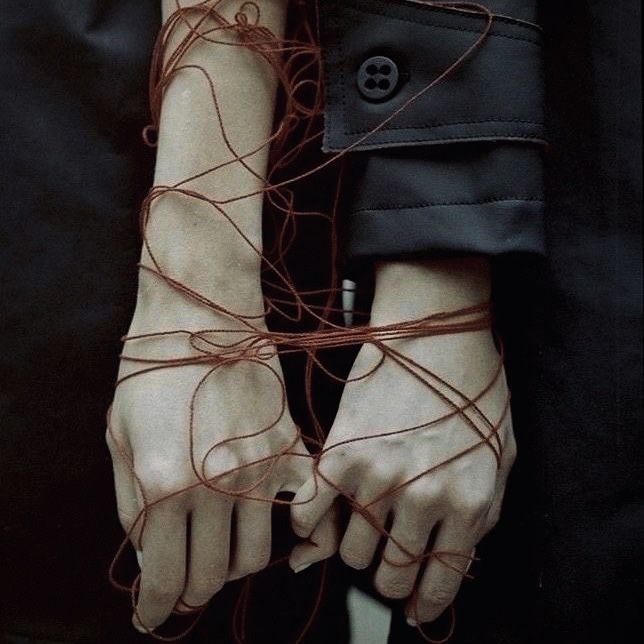
Most toxic relationships don't announce themselves. They unfold quietly.
It starts with a partner dismissing your opinion in a small way. Or shutting down after a fight. Or teasing you in front of friends until you stop speaking up. Slowly, what was supposed to feel like home begins to feel unsafe.
The data on emotional and psychological abuse is sobering. The Office for National Statistics (ONS) estimated that 2.4 million adults in England and Wales experienced domestic abuse in the year ending March 2023, with psychological abuse being the most commonly reported form (ONS, 2023). In the US, the Centers for Disease Control and Prevention (CDC) reports that approximately 47% of women and 47% of men have experienced psychological aggression from an intimate partner in their lifetime (National Intimate Partner and Sexual Violence Survey, 2010/2012).
The psychological effects are lasting. A meta-analysis by Lagdon et al. (2014) in *Trauma, Violence, & Abuse* found that emotional abuse was associated with significantly elevated rates of depression, anxiety, PTSD, and suicidality—with effect sizes comparable to, and in some cases exceeding, those associated with physical abuse.
1. Criticism Becomes Normal
Every couple argues. But criticism in a toxic relationship stops being about the behaviour and attacks who you are. It sounds like: "You're useless," "You always fail," "You're not good enough."
John Gottman's research at the University of Washington, spanning over 40 years of longitudinal studies, identified criticism as one of the "Four Horsemen of the Apocalypse"—four communication patterns that predict relationship breakdown with over 90% accuracy (Gottman & Silver, 1999, *The Seven Principles for Making Marriage Work*).
Gottman distinguishes between a complaint ("I'm upset that you didn't take out the bins") and criticism ("You never think about anyone but yourself"). The latter attacks character, not behaviour, and erodes the foundation of respect.
2. Silence Is Used as Punishment
The silent treatment isn't just "needing space." In toxic relationships, silence becomes a weapon. It's designed to make you feel invisible, anxious, and desperate to fix things—even when you haven't done anything wrong.
Gottman calls this stonewalling—another of his Four Horsemen. Research from his lab shows that when one partner habitually stonewalls, the other partner's heart rate elevates to stress levels (above 100 BPM), triggering a physiological flood response. Over time, this pattern predicts emotional disengagement and relationship dissolution.
A study by Schrodt et al. (2014) in *Communication Monographs*, analysing 74 studies, found that the demand-withdraw pattern (where one partner seeks engagement and the other withdraws) was significantly associated with lower relationship satisfaction, higher distress, and increased aggression.
3. You Walk on Eggshells
You start monitoring your words, tone, and actions to avoid triggering your partner. You lose spontaneity. You stop being yourself.
Psychologists describe this as hypervigilance—a state of chronic alertness associated with trauma and anxiety disorders. Research on complex PTSD by Judith Herman (1992) in *Trauma and Recovery* identifies this hypervigilance as a hallmark of living in an environment of sustained threat, even when that threat is emotional rather than physical.
4. Gaslighting Makes You Question Reality
"That never happened." "You're being dramatic." "I was joking, why are you so sensitive?" Gaslighting erodes your ability to trust your own perception.
The term originates from the 1944 film *Gaslight*, but it has been extensively studied in clinical psychology. Stern (2018), in *The Gaslight Effect*, describes it as a systematic pattern where the abuser denies the victim's reality until the victim begins to doubt their own memory, perception, and sanity.
Research by Sweet (2019) in *American Sociological Review* found that gaslighting is not merely interpersonal manipulation but reflects broader social inequalities, with women and marginalised individuals disproportionately affected.
5. Emotional Needs Are Dismissed
When you express how you feel and are met with "You're overreacting" or "Here we go again," your emotional needs are being invalidated. Over time, you stop sharing altogether.
Emotional invalidation is recognised in clinical psychology as a significant risk factor for psychological distress. Marsha Linehan's biosocial theory, foundational to Dialectical Behaviour Therapy (DBT), posits that chronic emotional invalidation—particularly in formative relationships—contributes to emotional dysregulation and is a key factor in the development of borderline personality disorder (Linehan, 1993).
6. Control Disguised as Care
"I just worry about you" becomes "Who were you with?" Control often hides behind concern, but it slowly restricts your freedom and autonomy.
The Duluth Model, developed by the Domestic Abuse Intervention Project, identifies power and control as the central dynamic in abusive relationships—a wheel of behaviours including isolation, intimidation, economic abuse, and emotional manipulation, all maintained by an underlying need for dominance.
The UK government's Coercive Control Act (2015)—Section 76 of the Serious Crime Act—made it a criminal offence to engage in "controlling or coercive behaviour" in intimate or family relationships, recognising the severity of non-physical abuse.
7. You Feel Lonely in the Relationship
Emotional toxicity creates isolation even when you're physically together. You feel alone because the emotional connection has been replaced by tension, resentment, or indifference.
Research by de Jong Gierveld et al. (2015) distinguishes between social loneliness (lacking a broader social network) and emotional loneliness (lacking a close, intimate attachment). People in emotionally toxic relationships frequently experience emotional loneliness while appearing to be in a partnership—a paradox that compounds shame and confusion.
8. You've Lost Yourself
Perhaps the clearest sign: you don't recognise yourself anymore. Your confidence has eroded. Your boundaries have dissolved. You've been so focused on managing the relationship that you've forgotten what you actually need.
This loss of identity is consistent with what psychologists call self-concept erosion. A study by Arriaga et al. (2018) in *Journal of Personality and Social Psychology* found that people in psychologically aggressive relationships showed significant reductions in self-clarity and self-esteem over time, even controlling for baseline levels.
What You Can Do
Recognising these signs is the first step. Here are evidence-based next steps:
- Individual therapy can help you rebuild self-trust and process the emotional impact. CBT and trauma-focused approaches (including EMDR) have strong evidence for recovery from relational trauma
- Couples therapy may be appropriate in some cases—but not where there is active coercive control, as therapy can be weaponised by the controlling partner (NICE guideline CG110)
- Safety planning is essential if you're in an abusive relationship. The UK's National Domestic Abuse Helpline (0808 2000 247) provides free, confidential support 24/7
- Journalling can help you track patterns and rebuild trust in your own perceptions
You deserve a relationship where you feel safe, valued, and free to be yourself.