Am I a High-Functioning Anxious Person? 5 Subtle Signs Most People Overlook
You don't look anxious. But you feel it every day.
You hold things together, meet deadlines, respond on time, and smile through it all. No one would guess you're struggling—and maybe you're not sure either. But behind the routine, your mind rarely rests. You replay conversations, question your worth, and keep going even when you're depleted.
This might be more than just stress. You could be experiencing high-functioning anxiety, and it's more common than you think.
What is High-Functioning Anxiety?
High-functioning anxiety isn't a formal diagnosis in the DSM-5-TR or ICD-11. It's a descriptive term for people who meet or exceed external expectations while experiencing persistent, often debilitating anxiety internally. It sits on the anxiety spectrum—frequently overlapping with Generalised Anxiety Disorder (GAD)—but it looks different because the person appears to be coping well.
Prevalence
GAD, the closest clinical parallel, affects approximately 5.7% of adults in the UK over a lifetime (McManus et al., 2016, *Adult Psychiatric Morbidity Survey*) and 3.1% of the US population in any given year (NIMH, 2022). However, many people with anxiety symptoms never seek treatment because their external functioning masks the internal distress.
A 2023 survey by the Mental Health Foundation found that 73% of UK adults reported feeling anxious at least sometimes, with 36% reporting anxiety frequently or all the time. The gap between these prevalence figures and clinical treatment-seeking suggests a large population living with undiagnosed or sub-threshold anxiety—many of whom would meet the description of "high-functioning anxious."
Understanding the GAD-7 Scale
The GAD-7 (Generalised Anxiety Disorder 7-item scale), developed by Spitzer et al. (2006) and published in *Archives of Internal Medicine*, is the most widely used screening tool for anxiety in clinical settings. It asks about seven symptoms over the past two weeks:
- Feeling nervous, anxious, or on edge
- Not being able to stop or control worrying
- Worrying too much about different things
- Trouble relaxing
- Being so restless that it's hard to sit still
- Becoming easily annoyed or irritable
- Feeling afraid, as if something awful might happen
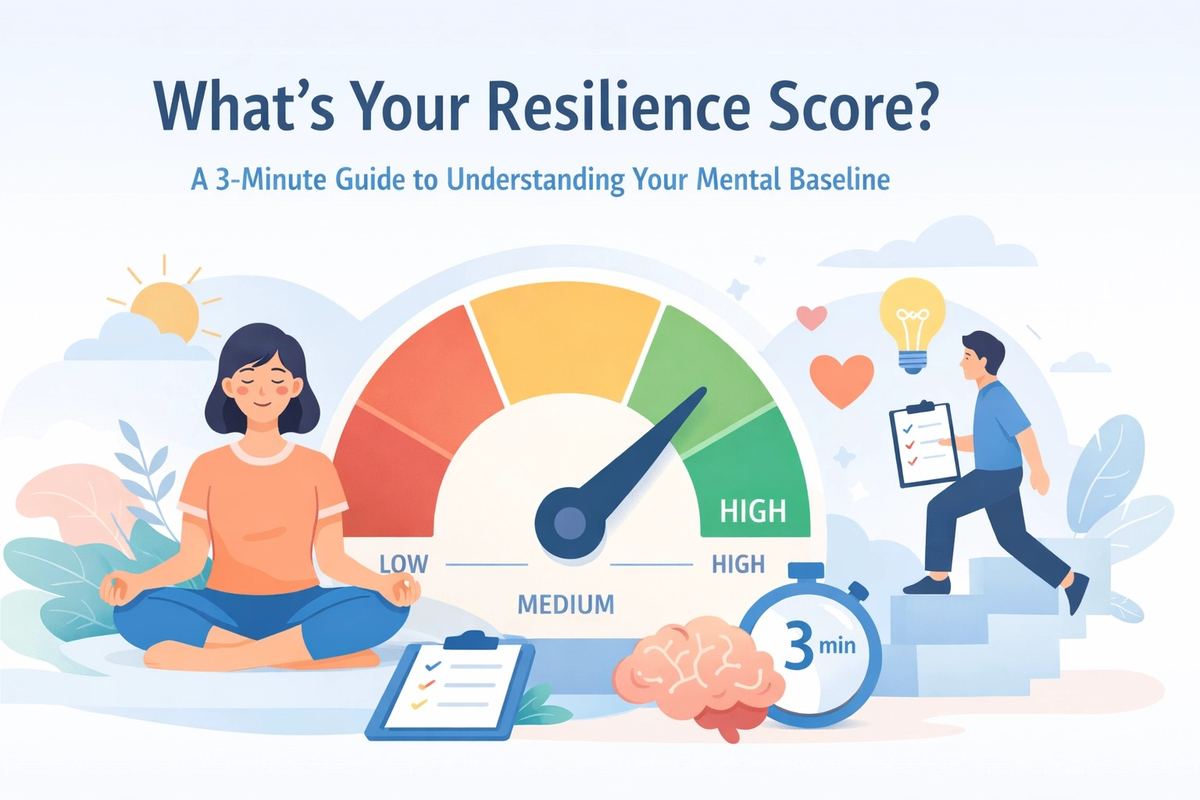
Scores range from 0–21, with clinical thresholds at: - 5–9: Mild anxiety - 10–14: Moderate anxiety - 15–21: Severe anxiety
Many people with high-functioning anxiety score in the moderate range (10–14) but never seek help because they assume their ability to function means they don't "really" have anxiety.
5 Signs You Might Be Experiencing High-Functioning Anxiety
1. You Can't Relax, Even When Everything's "Fine"
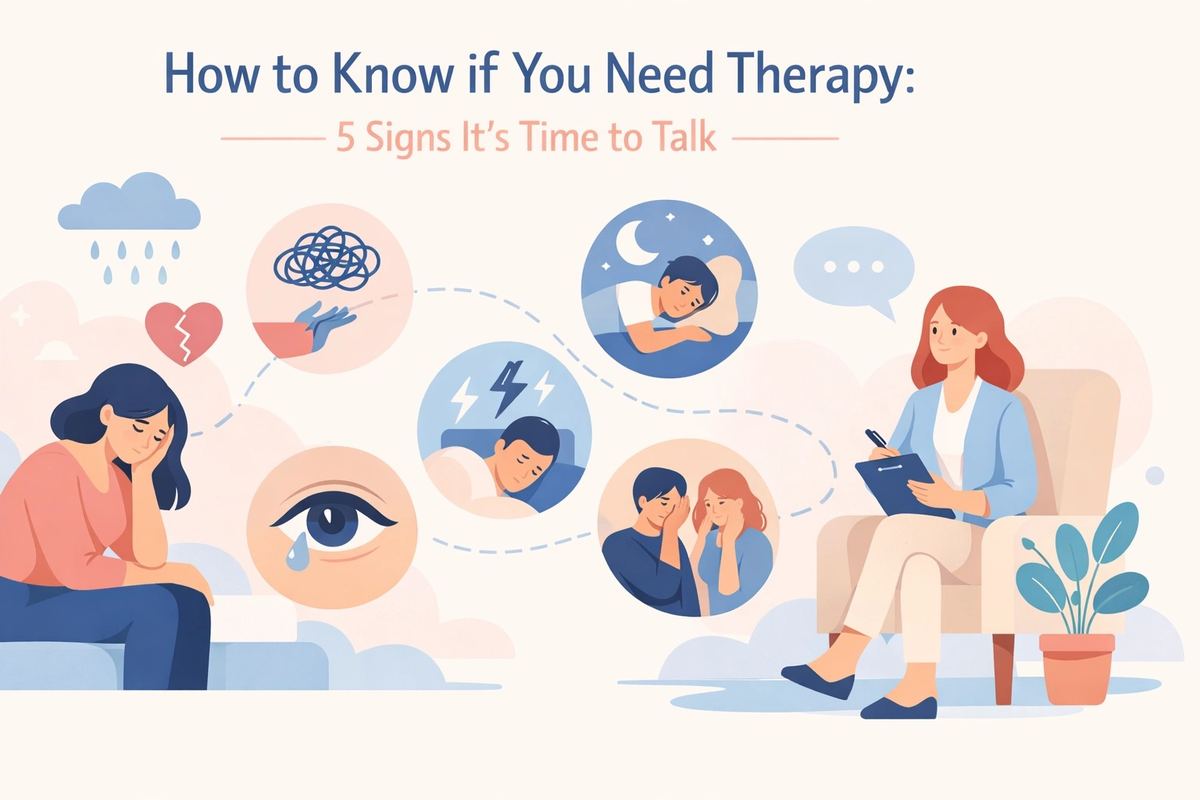
When your to-do list is done, you don't feel relief. You feel restless. Your nervous system stays on high alert, searching for the next task, the next mistake, the next fire to put out.
This is rooted in autonomic nervous system dysregulation. Dr. Stephen Porges' Polyvagal Theory (2011) explains that the nervous system has three states: ventral vagal (safe and social), sympathetic (fight or flight), and dorsal vagal (freeze and shutdown). People with chronic anxiety spend most of their time in a sympathetic-dominant state, where the body is primed for threat even in the absence of danger.
Research by Thayer et al. (2012) in *Neuroscience & Biobehavioral Reviews* found that reduced heart rate variability (HRV)—a marker of vagal tone—is consistently associated with anxiety and difficulty downregulating the stress response.
2. You're a Perfectionist and Deeply Self-Critical
You triple-check emails. You dwell on small slip-ups. Even praise makes you uncomfortable because your inner voice is louder and harsher.
Perfectionism is strongly linked to anxiety. A meta-analysis by Smith et al. (2018) in *Psychological Bulletin* found that self-oriented perfectionism (imposing unrealistic standards on oneself) and socially prescribed perfectionism (believing others demand perfection from you) were both significantly associated with anxiety, depression, and burnout. Crucially, they found that perfectionism has increased significantly across generations, with millennials and Gen Z scoring higher than any previous cohort.
3. You Overthink Every Interaction
You replay what you said in meetings, worry about how texts were interpreted, and rehearse conversations before they happen. Social interactions are mentally exhausting.
This cognitive pattern is called post-event processing and is a well-documented feature of social anxiety. Research by Clark & Wells (1995) demonstrated that people with social anxiety engage in extended, negatively biased reviews of social situations, which maintains the anxiety cycle by reinforcing negative self-perceptions.
4. You Say Yes When You Mean No
People-pleasing is a hallmark of high-functioning anxiety. You overcommit, overdeliver, and overextend—because saying no feels dangerous.
Harriet Braiker (2001) identified the "disease to please" as rooted in anxiety about social rejection and conflict. From an evolutionary psychology perspective, people-pleasing activates the brain's attachment system—saying yes maintains social bonds, while saying no triggers fear of abandonment or disapproval.
5. Physical Symptoms You Can't Explain
Jaw tension (bruxism), stomach issues (IBS), headaches, insomnia, muscle tightness. Your body is holding what your mind won't acknowledge.
The mind-body connection in anxiety is well established. The gut-brain axis—a bidirectional communication system between the gastrointestinal tract and the central nervous system—is increasingly recognised in anxiety research. A meta-analysis by Fond et al. (2014) in *European Archives of Psychiatry and Clinical Neuroscience* found that anxiety disorders were significantly associated with functional gastrointestinal disorders, particularly IBS, with odds ratios ranging from 2.0 to 4.0.
Why It Goes Unnoticed
Because you're functioning. You're meeting expectations. From the outside, everything looks fine. But inside, you're running on adrenaline, not peace.
The concept of masking—presenting a competent, calm exterior while experiencing internal distress—is increasingly recognised in clinical literature, particularly in relation to anxiety, autism, and ADHD in women. A study by Chisholm et al. (2023) found that emotional masking was associated with higher levels of psychological distress, burnout, and delayed help-seeking.
What You Can Do
- Therapy — particularly CBT and Acceptance and Commitment Therapy (ACT) — has strong evidence for anxiety. A meta-analysis by A-Tjak et al. (2015) found ACT produced medium effect sizes for anxiety (d = 0.57) across 39 randomised trials
- Nervous system regulation practices — breathwork (specifically extended exhale breathing), progressive muscle relaxation, and yoga have evidence for reducing sympathetic nervous system activation
- Routine outcome monitoring — tracking your GAD-7 score over time can help you and your therapist measure genuine progress, not just outward functioning
- Self-compassion work — research by Kristin Neff and Christopher Germer shows that self-compassion interventions reduce anxiety and perfectionism while increasing psychological resilience
You don't need to be in crisis to deserve support. High-functioning anxiety is real, it's exhausting, and it's treatable.