
Is Anxiety Therapy Online Right for Your Life?
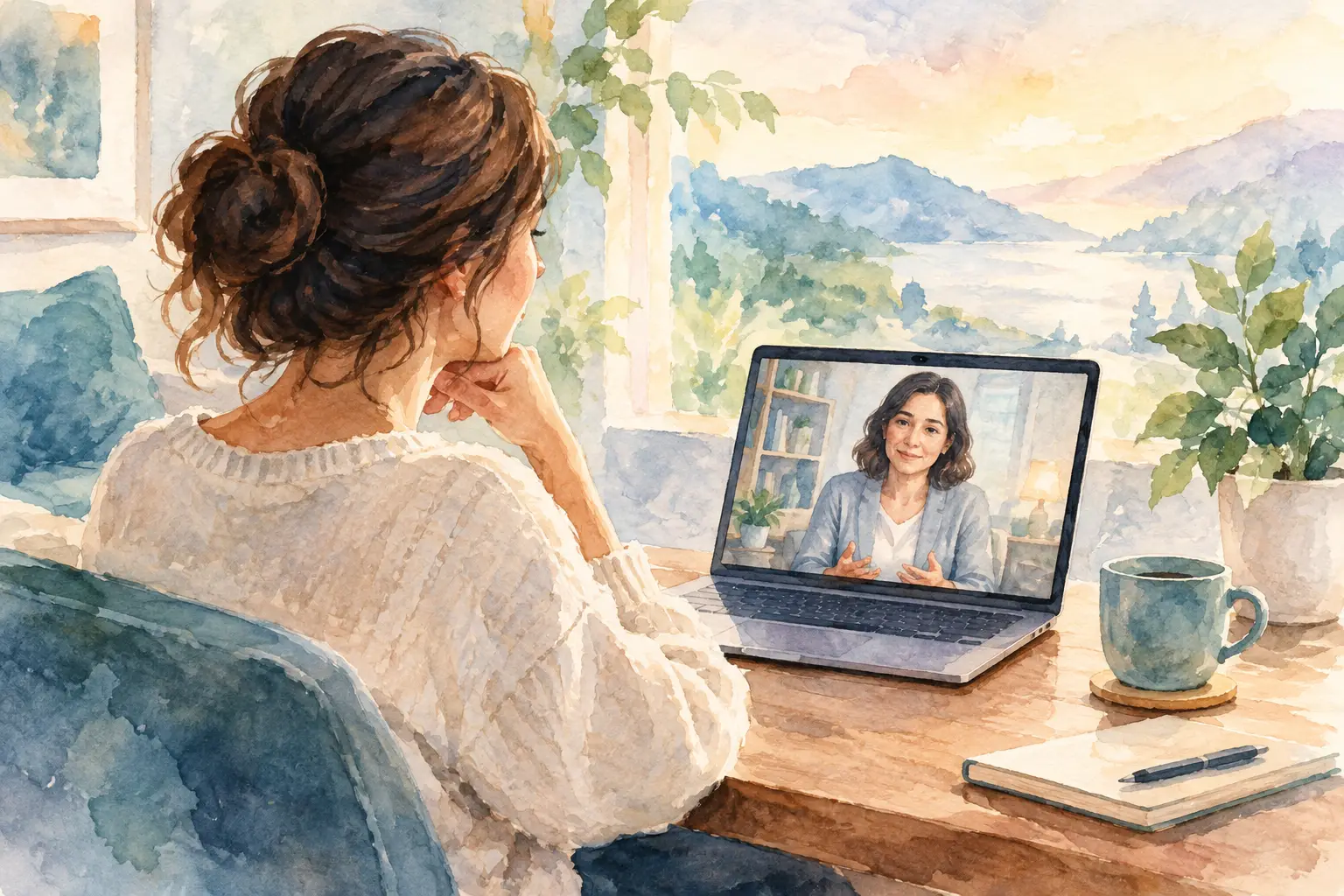
Your heart is racing before a meeting. You have reread a harmless message six times. Or perhaps anxiety arrives at night, just as the rest of the house becomes quiet. When those feelings keep taking up more space than you want them to, anxiety therapy online, can offer a private, practical route to professional support without needing to rearrange your whole life.
Online therapy is not about simply talking to a screen. Done well, it is a therapeutic relationship with a qualified professional, supported by a format that fits around work, caring responsibilities, travel or the understandable wish to begin from somewhere familiar.
What anxiety therapy online can help with
Anxiety looks different from person to person. For some, it is a constant undercurrent of worry that makes ordinary decisions feel disproportionately difficult. For others, it shows up as panic symptoms, social anxiety, perfectionism, sleeplessness, health worries, irritability or the sense that they can never properly switch off. You quickly do a light weight Anxiety check with MySafeTherapy. It is not a diagnosis but gives you a reason to connect with a professional.
Therapy gives you a confidential space to understand what is happening beneath those patterns. A therapist may help you notice the thoughts, situations, behaviours and physical sensations that keep anxiety going. Together, you can develop ways of responding that feel more useful than avoidance, reassurance-seeking or pushing through until you are exhausted.
The aim is not to eliminate every anxious feeling. Anxiety is a normal human response to uncertainty and threat. The work is about reducing its hold on your choices, building confidence in your ability to cope, and making room for the life you want to lead.
It can be especially useful when anxiety is affecting daily life
You do not have to wait for a crisis to seek support. Therapy can be worthwhile when worry is affecting your concentration, sleep, relationships, work, confidence or ability to enjoy time off. It can also help if a recent change - a difficult workplace, bereavement, parenthood, illness, a relationship ending or financial pressure - has made existing anxiety harder to manage.
If you are experiencing thoughts of harming yourself, feel unable to keep yourself safe, or need urgent help, online therapy is not a crisis service. Contact emergency services, NHS 111, Samaritans or your local crisis team for immediate support.
How online therapy works in practice
The first practical question is usually simple: will this feel as real as sitting in a room with someone? For many people, the answer is yes. Video sessions allow for facial expression, tone and the natural back-and-forth that matters in therapy. Some people also prefer chat-based support or an avatar-led format, particularly when saying something aloud feels too exposing at first.
The right format depends on you. Video may suit someone who values connection and can find a private place to speak. Written sessions can give you time to find the words and leave a clear record to reflect on later. Avatar-based sessions may provide a gentler first step for people who feel self-conscious on camera. What matters most is that the service is clinically led and that you can work consistently with a therapist you trust.
At MySafeTherapy, sessions are delivered by therapists registered with recognised professional bodies such as BACP, UKCP and HCPC. That professional accountability matters. It means your care is not being left solely to automated prompts or generic wellbeing advice.
Why support between sessions matters
A weekly therapy appointment can be valuable, but anxiety rarely waits for appointment day. It can appear in the 167 hours between one session and the next: before a presentation, after an awkward conversation, while lying awake at 2am, or during the Sunday evening dread before work.
This is where a blended approach can make a meaningful difference. Alongside therapist-led sessions, structured digital tools such as mood tracking, guided wellbeing journeys, self-check quizzes and weekly progress reports can help you spot changes earlier and practise what you are learning in ordinary life.
These tools should not be presented as a substitute for therapy. A mood score alone cannot understand the context of your week, challenge an unhelpful belief or respond with human judgement. But when used alongside a therapist, it can give both of you a clearer picture of patterns, progress and the moments that need attention.
For example, you might notice that your anxiety peaks after poor sleep, before particular work interactions or when you have gone several days without taking a break. That awareness creates something specific to bring into therapy, rather than trying to recall a whole week under pressure.
Choosing a safe online therapy service
Convenience should never mean cutting corners on safety. Before booking anxiety therapy online, look for clear information about who provides the therapy, how they are registered, how your data is handled and what support is available if your needs change.
A credible service should be transparent about its therapists' professional registrations and use secure, encrypted sessions. If you are sharing deeply personal information, privacy is not an optional extra. UK GDPR compliance, clear consent processes and a straightforward explanation of safeguarding boundaries all help you make an informed choice.
It is also worth checking how matching works. Finding the right therapist is not about choosing the most impressive profile. It is about fit: their experience, therapeutic approach, availability and whether you feel able to be honest with them. A good service makes it easy to share your preferences and change direction if the match does not feel right.
Be cautious about platforms that promise instant cures, rely only on unregulated AI chat, or make it difficult to identify a qualified clinician. Self-guided wellbeing support can be genuinely helpful for reflection and routine, but it is different from therapy. If anxiety is persistent or affecting your functioning, human clinical oversight is a valuable safeguard.
Getting started without making it a big ordeal
Seeking help can feel like another task when you are already overwhelmed. The best first step is often the smallest one. You might complete an emotional self-check, write down the situations that are troubling you most, or choose a time when you are likely to have privacy and headspace.
You do not need a polished explanation of what is wrong. You can begin with something as direct as: “I am worrying all the time and I do not know how to stop,” or “I look fine at work, but I feel constantly on edge.” A therapist is there to help you make sense of the detail.
Online therapy can also remove practical barriers. There is no need for a GP referral, no commuting after a demanding day, and no need to sit in a waiting room if that itself raises your anxiety. With rapid booking and sessions from £50, support can feel more immediate and manageable. That said, you still need to protect the appointment time where possible. Treat it as care, not another meeting you can squeeze in while answering emails.
Make your session space work for you
Privacy is helpful, but it does not need to be perfect. Headphones, a parked car, a quiet room during a lunch break or a walk-and-talk format where appropriate may all be options. Tell your therapist if you are worried someone might overhear you. They can help you plan a format that feels safe.
It is normal to feel nervous before your first session, and equally normal not to know whether you have “done therapy correctly” afterwards. Progress is rarely a straight line. Some sessions bring relief; others raise difficult feelings before they settle. The key is to keep the conversation open, including about what is and is not helping.
You deserve support that meets you where life is actually happening - not only for 50 minutes a week, but in the small moments when anxiety asks you to retreat. Starting with one honest conversation can be a calm, practical act of looking after yourself.