
Online Therapy UK That Fits Around Real Life
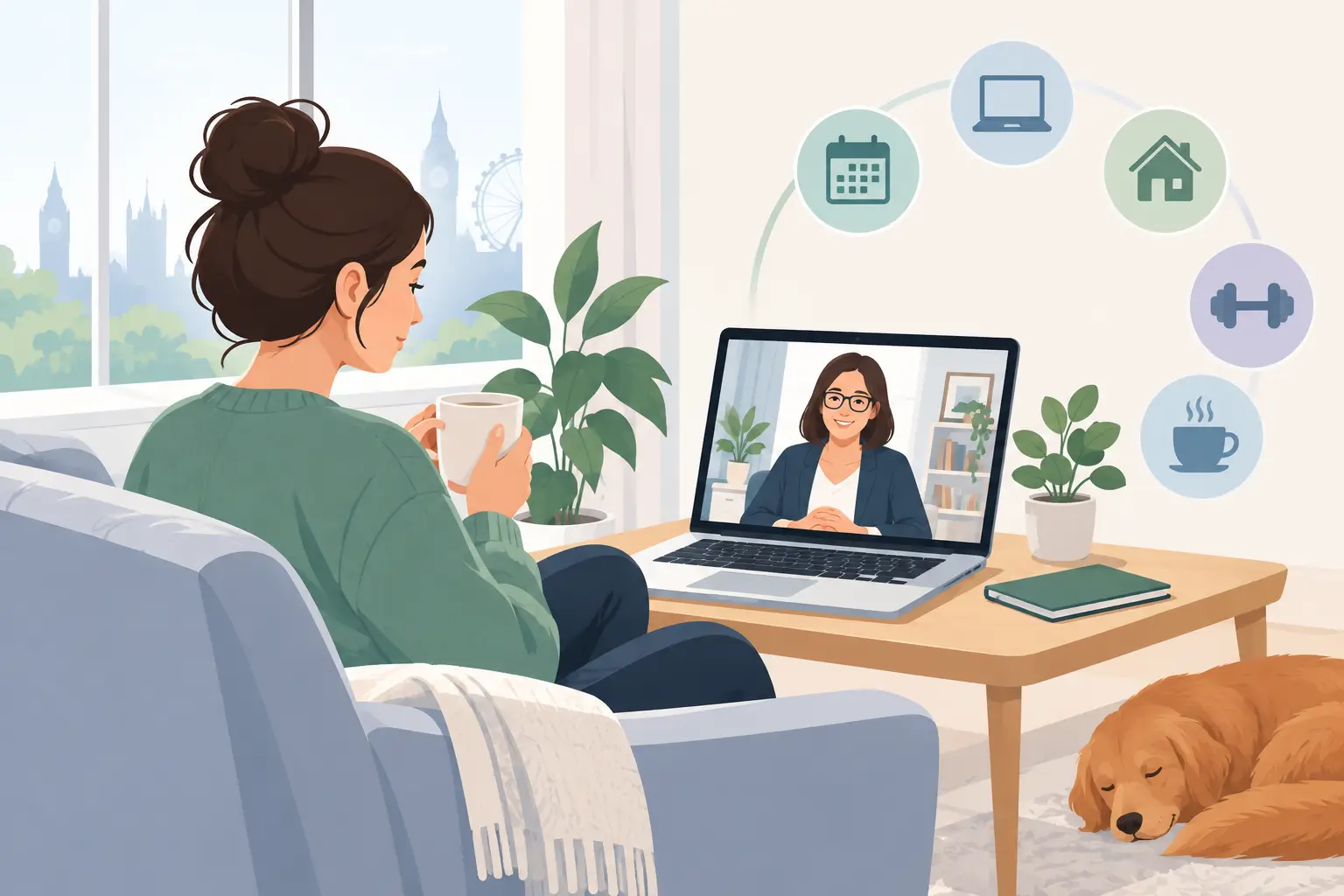
A difficult Monday morning, a sleepless night, or the moment you realise stress is following you into every conversation rarely arrives neatly in time for a weekly appointment. Online therapy services in the UK can offer a more practical way to start: qualified support from a private place that suits your life, without needing a GP referral or spending months on a waiting list.
That convenience matters, but it should never mean lowering your standards. Therapy is personal work. The right online service should make access simpler while protecting the things that make therapy effective: a properly qualified professional, clear boundaries, privacy and a relationship where you feel heard.
What online therapy in the UK can help with
Online therapy is not a lesser version of face-to-face therapy. For many people, it is simply the format that makes consistent support possible. Sessions usually take place by secure video, though some people feel more comfortable beginning with written chat or an avatar-based session. If speaking aloud at home feels difficult, being able to write down what is happening first can remove a real barrier.
People use online therapy for anxiety, burnout, low mood, grief, workplace pressure, relationship difficulties and emotional exhaustion. It can also help when nothing appears dramatically wrong, but you feel unlike yourself: less patient, more withdrawn, permanently on edge, or unable to switch off.
The format will not suit every situation. If you are in immediate danger, feel unable to keep yourself safe, or need urgent mental health support, online therapy is not an emergency service. Contact 999, attend A&E, or use an urgent crisis service instead. A responsible provider will be clear about this from the start and will explain its safeguarding approach.
Why access is only the first step
A video call can be easier to fit around work, caring responsibilities or travel, but therapy is not just the 50 minutes you spend talking. The harder moments often happen between appointments: before a meeting you are dreading, after an argument, or when your thoughts begin to spiral at 2am.
That is why it helps to look for care that provides continuity between sessions. Mood tracking, guided wellbeing exercises, self-checks and weekly progress reports can give structure to what you are noticing in day-to-day life. They do not replace a therapist. They give you useful material to bring into therapy and small ways to practise what you are learning when your therapist is not in the room.
This is different from relying on an unregulated wellbeing app alone. Automated prompts can be useful for reflection, but they cannot hold clinical responsibility, adapt meaningfully to your history, or make professional decisions about risk. Human accountability remains essential.
How to choose online therapy UK services safely
It is reasonable to want rapid access. It is equally reasonable to ask who will be supporting you and how your information is handled. Before booking, check that the therapist is registered with a recognised professional body such as BACP, UKCP or HCPC. Registration is not just a logo. It indicates that the professional works to recognised ethical standards, supervision and complaints procedures.
You should also understand the practical details. Ask how therapist matching works, what type of therapy is offered, how much sessions cost, and whether you can change therapist if the match does not feel right. A good match is not about finding someone who agrees with everything you say. It is about feeling safe enough to be honest, while working with someone whose approach makes sense for your needs.
Privacy deserves the same attention. Look for clear information about GDPR, secure or encrypted sessions, data storage and who can access your records. You should never have to guess whether a platform treats sensitive information with care.
Finally, be wary of promises that therapy will fix everything quickly. Progress is often meaningful but uneven. You may feel lighter after one session, then find a difficult memory or pattern comes into sharper focus. That does not mean therapy is failing. It can mean you and your therapist are reaching the work that needs attention.
Making your first session feel more manageable
You do not need a polished explanation of your feelings before you begin. In fact, many people seek therapy because they cannot yet put the problem into words. A first session is a place to start untangling it, not a test you need to pass.
It can help to think about what has changed recently, what feels hardest at the moment, and what you would like life to feel like in a few months. You might want better sleep, fewer panic symptoms, clearer boundaries at work, or simply space to understand why you are so tired. Specific goals can be useful, but uncertainty is a perfectly valid starting point too.
Create as much privacy as you can for the appointment. That might mean sitting in a parked car, using headphones in a bedroom, or arranging your session during a lunch break in a quiet room. Check your connection beforehand and keep a glass of water nearby. Small practical steps can make it easier to stay present.
If video feels too exposing at first, say so. A therapist should not treat this as resistance or a failure. The process can be adjusted, whether that means beginning with chat, using an avatar-based option where available, or spending time on what makes being seen feel uncomfortable.
The questions worth asking your therapist
The early sessions are also your opportunity to understand how you will work together. You can ask what approach they use, how they measure progress, what happens if you are struggling between sessions, and how they handle confidentiality and safeguarding. These are sensible questions, not awkward ones.
You can also be honest if something does not land. Perhaps you want more practical strategies, a slower pace, or more time to explore a particular issue. Therapy works best as a collaboration. Your feedback helps shape the support around you.
The value of support between appointments
Weekly therapy can be powerful, but insight fades if it is never brought into ordinary life. A short mood check-in may reveal that your anxiety peaks after certain work interactions. A guided exercise might help you notice the thought pattern behind a recurring argument. A weekly report can make progress visible when you are tempted to assume that nothing has changed.
These tools are most useful when they remain simple. You do not need to turn your wellbeing into a full-time project or complete every exercise perfectly. The purpose is to create a gentle thread of support through the 167 hours between one appointment and the next.
MySafeTherapy combines accredited therapist-led sessions with structured digital support, including self-checks, progress insights and guided journeys. For someone who wants professional care without a long, complicated route into it, that blended approach can make starting feel more immediate and staying engaged feel more achievable.
When online therapy may not be the best fit
Remote sessions rely on having enough privacy, a stable connection and a setting where you can speak freely. If your home is not safe, you are experiencing domestic abuse, or you need intensive clinical support, another route may be more appropriate. A trustworthy service will help you understand its limits rather than trying to be everything to everyone.
Some people also simply prefer the feeling of being in a room with their therapist. That preference is valid. The best format is the one you can attend consistently and use honestly, not the one that appears most convenient on paper.
Starting therapy does not require you to reach a breaking point or find the perfect words. If something has been weighing on you for longer than you would like, a private first appointment can be a practical place to begin making sense of it.