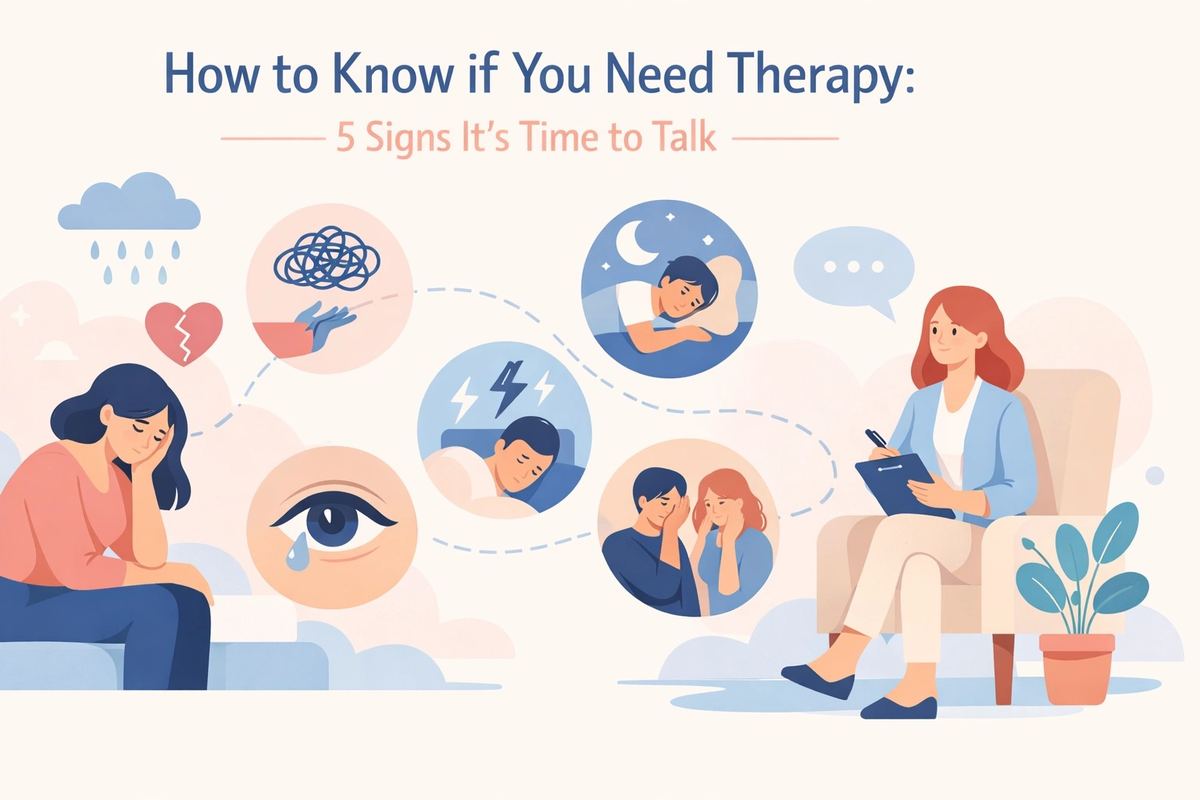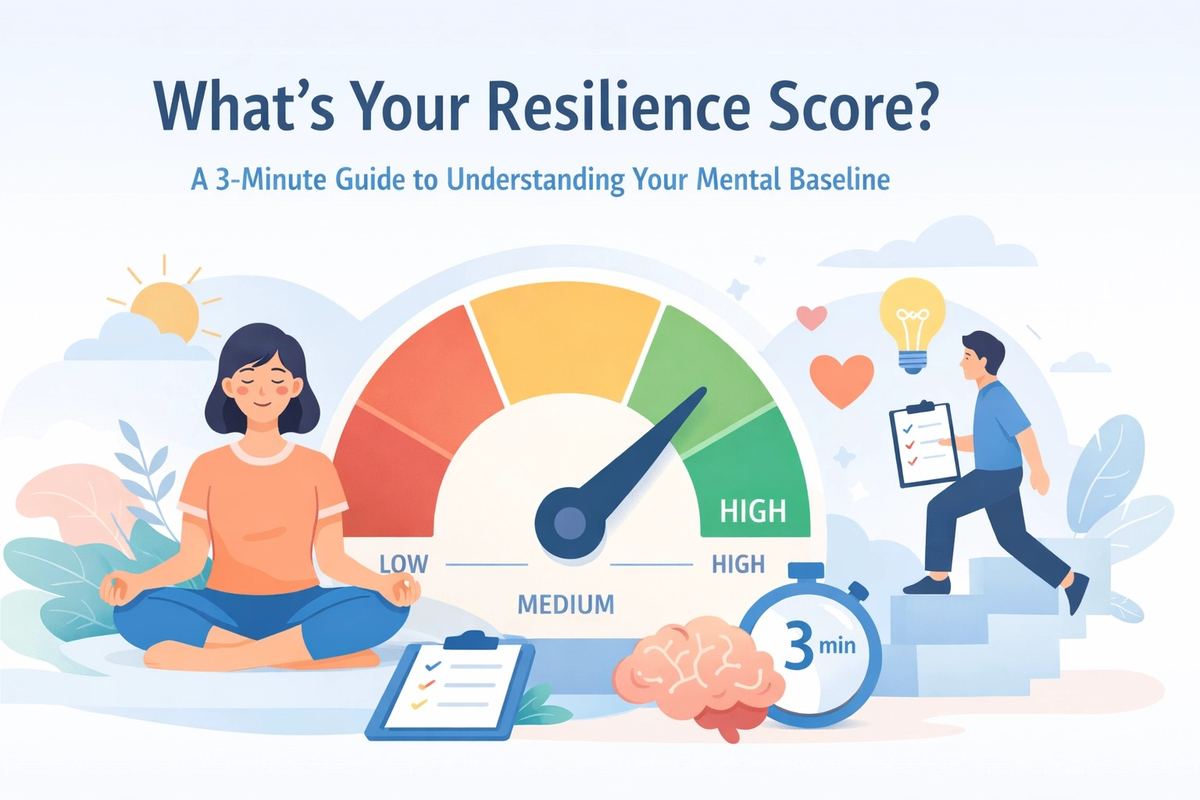
Spotting Emotional Exhaustion: A Guide to Taking Back Control
You're running on empty but still pushing through each day. Emotional exhaustion often creeps in quietly, draining your energy before you even notice. This guide will help you spot the early signs and take gentle, evidence-based steps to protect your mental well-being.
What Is Emotional Exhaustion?
Emotional exhaustion is more than just "feeling tired." It's a state of chronic emotional depletion resulting from prolonged stress, excessive demands, or sustained emotional labour. It is one of the three core dimensions of burnout, as defined by the World Health Organization (WHO) in its 11th International Classification of Diseases (ICD-11, 2019).
The WHO classifies burnout as an "occupational phenomenon" characterised by: - Emotional exhaustion — feelings of energy depletion or being drained - Depersonalisation — increased mental distance from one's job or cynicism - Reduced personal efficacy — feelings of incompetence and lack of achievement
While burnout was originally studied in occupational settings, researchers now recognise that emotional exhaustion can stem from any sustained demand—caregiving, relationships, parenting, academic pressure, or chronic illness.
Recognising Emotional Exhaustion
The Maslach Burnout Inventory
The gold standard for measuring burnout is the Maslach Burnout Inventory (MBI), developed by Christina Maslach and Susan Jackson in 1981 and updated multiple times since. The MBI has been used in over 6,000 published studies and is validated across occupational, educational, and clinical settings.
The emotional exhaustion subscale of the MBI includes items such as: - "I feel emotionally drained from my work" - "I feel used up at the end of the day" - "I feel fatigued when I get up and have to face another day"
If these statements resonate, it's worth paying attention.
Subtle Signs to Watch For
Emotional exhaustion often begins with small changes that are easy to dismiss:
- Persistent fatigue that sleep doesn't resolve — research by Söderström et al. (2012) in *Sleep* found that people with chronic work-related stress showed altered cortisol awakening responses, leading to fatigue even after adequate sleep duration
- Irritability and emotional reactivity — snapping at loved ones over minor issues, or feeling disproportionately upset by small setbacks
- Cognitive fog — difficulty concentrating, forgetfulness, and impaired decision-making. A study by Deligkaris et al. (2014) in *PLOS ONE* found that burnout was associated with significant deficits in executive function, attention, and memory
- Emotional numbness — feeling detached, flat, or "nothing" rather than sad or anxious
- Loss of enjoyment — activities you once found pleasurable feel like obligations
Common Triggers
Understanding what drives emotional exhaustion is key to prevention:
- Sustained work pressure — the Health and Safety Executive (HSE) reported that in 2022/23, 875,000 workers in Great Britain suffered from work-related stress, depression, or anxiety, resulting in 17.1 million lost working days
- Caregiving demands — the Carers UK 2023 State of Caring survey found that 30% of unpaid carers reported being "often or always" exhausted
- Relationship strain — ongoing conflict, poor communication, or supporting a partner through mental illness
- Cumulative micro-stressors — what psychologists call "allostatic load": the wear and tear on the body from chronic, low-level stress (McEwen, 1998, *New England Journal of Medicine*)
Reclaiming Your Well-being
Evidence-Based Recovery Strategies
1. Structured rest and recovery Rest doesn't mean doing nothing—it means intentional recovery. Research by Sonnentag & Fritz (2015) identifies four key recovery experiences: psychological detachment from work, relaxation, mastery experiences (learning something new), and control over leisure time. All four predict reduced emotional exhaustion.
2. Mindfulness-based stress reduction (MBSR) A meta-analysis by Khoury et al. (2015) in *Journal of Psychosomatic Research*, covering 29 studies, found that MBSR produced moderate to large reductions in stress (d = 0.56), anxiety (d = 0.63), and burnout symptoms. Even brief daily practice (10–15 minutes) showed benefits.
3. Physical activity The WHO recommends 150–300 minutes of moderate aerobic activity per week. A Cochrane review by Rebar et al. (2015) found that exercise has a moderate antidepressant effect and significantly reduces anxiety, with consistent benefits for emotional exhaustion.
4. Boundary setting Learning to say no is a skill, not a character trait. Research on compassion fatigue in healthcare workers (Figley, 2002) shows that clear professional and personal boundaries are protective against emotional depletion.
Building a Support Network
A supportive network can be a lifeline when you're feeling emotionally exhausted. Research by Holt-Lunstad et al. (2010), published in *PLOS Medicine*, found that strong social connections increased the odds of survival by 50%—a larger effect than quitting smoking or exercising.
Reach out to friends or family members you trust. Share what you're going through. If your circle feels small, consider support groups—both in-person and online communities can provide meaningful connection.
When to Seek Professional Support
If emotional exhaustion persists for more than a few weeks, begins affecting your daily functioning, or is accompanied by hopelessness or thoughts of self-harm, professional support is important.
Therapy—particularly CBT and acceptance and commitment therapy (ACT)—has strong evidence for treating burnout-related distress. A randomised controlled trial by Perski et al. (2017) found that internet-delivered CBT reduced emotional exhaustion by 35% over 12 weeks compared to a control group.
Therapy is not just for crises; it can be a proactive approach to maintaining mental well-being. Regular sessions can help keep emotional exhaustion at bay, allowing you to thrive rather than just survive.