
How Digital Therapy Tools are Shaping Anonymity in Mental Health Support
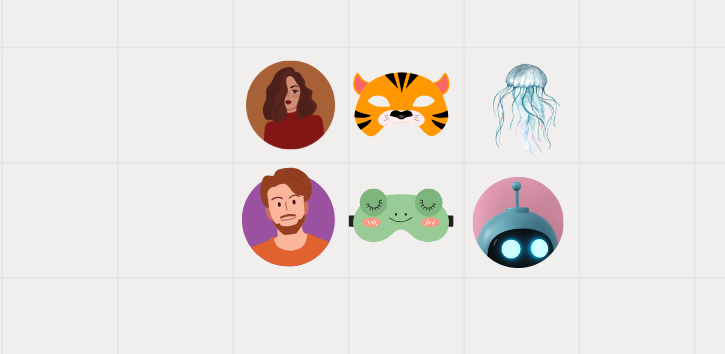
In today's digital age, mental health support is finding new avenues to help people express themselves more comfortably, and one of the most fascinating developments is the use of avatars in therapy.
Imagine being able to explore your thoughts and feelings without the fear of being judged, all while maintaining your privacy—that's the beauty of therapeutic avatars. These digital therapy tools offer a safe and anonymous environment, allowing individuals to engage in therapy without revealing their true identities.
But this isn't just marketing. There is a growing body of clinical research supporting avatar-based and digitally anonymised therapeutic interventions.
The Research Behind Avatar Therapy
UCL's AVATAR Therapy for Auditory Hallucinations
One of the most rigorously studied avatar-based interventions comes from University College London (UCL). Professor Julian Leff and colleagues developed AVATAR therapy, in which people who hear distressing voices create a digital avatar representing the voice, then engage in structured dialogue with it, guided by a therapist.
A landmark randomised controlled trial by Craig et al. (2018), published in *The Lancet Psychiatry*, compared AVATAR therapy with supportive counselling in 150 people with treatment-resistant auditory hallucinations. Results showed: - AVATAR therapy produced a significantly greater reduction in the severity of auditory hallucinations compared to the control group - 83% of AVATAR therapy participants showed at least some reduction in distressing voices at 12-week follow-up - The effect size was large (d = 0.89), making it one of the most promising psychological interventions for this population
A follow-up study confirmed that gains were maintained at 24 months (Ward et al., 2020, *Psychological Medicine*).
Oxford VR and Virtual Reality Exposure
Oxford VR, a spinout from the University of Oxford, has developed virtual reality-based treatments for fear of heights, social anxiety, and psychosis. Their approach uses immersive VR environments where patients engage with virtual scenarios under therapeutic guidance.
A trial published by Freeman et al. (2018) in *The Lancet Psychiatry* found that VR-delivered treatment for fear of heights produced a clinically significant reduction in acrophobia in 34 out of 49 participants (69%), with no therapist present during the VR sessions—suggesting that avatar/VR environments can create sufficient emotional safety for therapeutic work.
For psychosis, Freeman et al. (2022) tested a VR-based social anxiety intervention for people with psychotic disorders, finding significant improvements in paranoia and social avoidance.
Why Anonymity Matters in Therapy
The Stigma Barrier
For many people, the biggest barrier to therapy isn't cost or availability—it's the fear of being seen. This is especially true for:
- Men, who are significantly underrepresented in therapy services. The NHS IAPT programme reports that only 36% of referrals are male, despite men having higher rates of suicide (ONS, 2023)
- People from minority ethnic backgrounds, where cultural stigma around mental health can be acute
- LGBTQ+ individuals, who may fear discrimination or misunderstanding
- People in small communities, where visiting a therapist's office may feel too visible
A study by Clement et al. (2015) in *Psychological Medicine* conducted a meta-analysis of 144 studies and found that stigma was the fourth most common barrier to seeking mental health help, after a desire for self-reliance, lack of perceived need, and negative attitudes toward treatment.
The Online Disinhibition Effect
Psychologist John Suler (2004) described the "online disinhibition effect"—the phenomenon where people disclose more freely in online settings than face-to-face. His research identified six factors that promote this openness: dissociative anonymity, invisibility, asynchronicity, solipsistic introjection, dissociative imagination, and minimisation of status/authority.
Research on text-based therapy supports this. A study by Hull & Mahan (2017) in the *Journal of Telemedicine and Telecare* found that clients in text-based therapy disclosed sensitive information earlier in the therapeutic process and reported higher levels of perceived safety than those in face-to-face sessions.
How Avatar-Based Therapy Works in Practice
Avatar-based therapy encompasses several formats:
1. Client-as-avatar: The client selects or creates a digital representation of themselves. This allows participation in therapy without showing their face, reducing vulnerability and performance anxiety.
2. Therapist-as-avatar: In some models, the therapist also appears as an avatar, further reducing power dynamics and enabling clients to project qualities onto the therapeutic figure.
3. Externalised voices/figures: As in UCL's AVATAR therapy, the client creates a digital representation of a distressing internal experience (a critical voice, an abuser, a feared figure) and engages with it therapeutically.
Privacy and Safety
Digital therapy platforms must balance anonymity with safety. Clinical governance standards require: - Clear protocols for risk assessment and safeguarding, even in anonymous settings - Encryption and data protection compliant with GDPR and clinical data standards - Mechanisms for breaking anonymity when there is imminent risk of harm - Informed consent processes that explain the limits of confidentiality
The Future of Anonymous Therapy
As technology evolves, so will the ways we support mental health. The NICE guideline on digital therapies (expected to be updated in 2025) is anticipated to include clearer recommendations on the use of avatar-based and VR-delivered interventions, reflecting the growing evidence base.
The goal is simple: make it easier for people to ask for help, in whatever way feels safe for them.