How to Stop Catastrophising: Untangling 'What If' Anxiety Loops
What catastrophising is
Catastrophising is when the mind jumps to the worst outcome and treats it as likely. It is one of the most common patterns in anxiety. The more we replay a "what if", the more real it feels.
Your body often speaks first
A tight chest, a racing heart or an uneasy stomach can arrive before you even know what you are worried about. Noticing this helps you understand that you are in an anxiety response, not in actual danger.
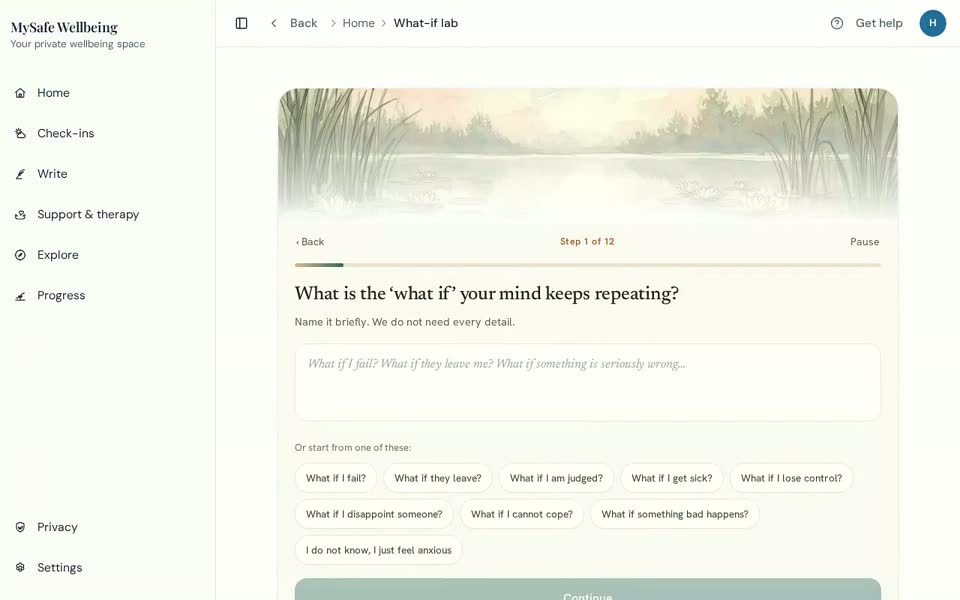
How the What-If Lab works
In twelve gentle steps it helps you:
- Name the "what if" your mind keeps repeating, or pick a common one.
- Notice what your body is doing.
- Say the worst case out loud, briefly. Naming it is not the same as it happening.
- Look at the evidence and how you would cope if it did happen.
- Choose a grounded next step.
Why this helps
Avoiding a worry tends to keep it alive. Looking at it calmly, with structure, usually shrinks it. If worry is constant, our overthinking and anxiety therapy pages explain how a therapist can help.
A note on safety
These tools are for reflection and self-help. They are not a diagnosis, a replacement for therapy or crisis support. If you are in immediate danger, call 999 or Samaritans on 116 123.