Why Am I So Triggered? Separating What Happened from What Your Mind Added
Why small things can feel huge
When something hurts more than it "should", it is usually not just the event. Our minds add meaning quickly: "they don't care", "I've done something wrong", "I'm not important". That meaning is what drives the strong feeling. This idea sits at the heart of cognitive behavioural therapy (CBT).
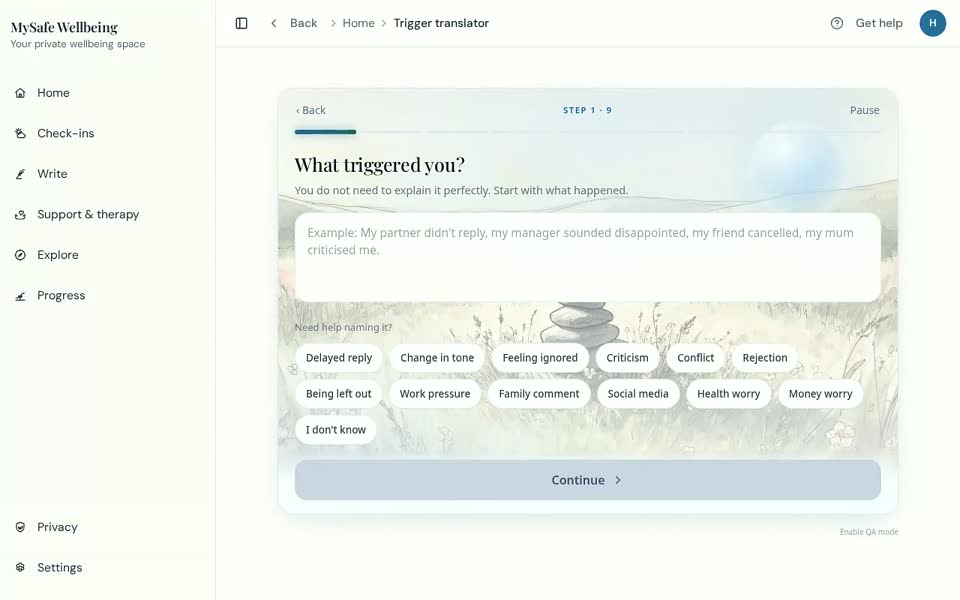
What the Trigger Translator does
It walks you through a reaction in nine short steps:
- **What triggered you?** Write it in a line, or pick from options like Delayed reply, Criticism or Being left out.
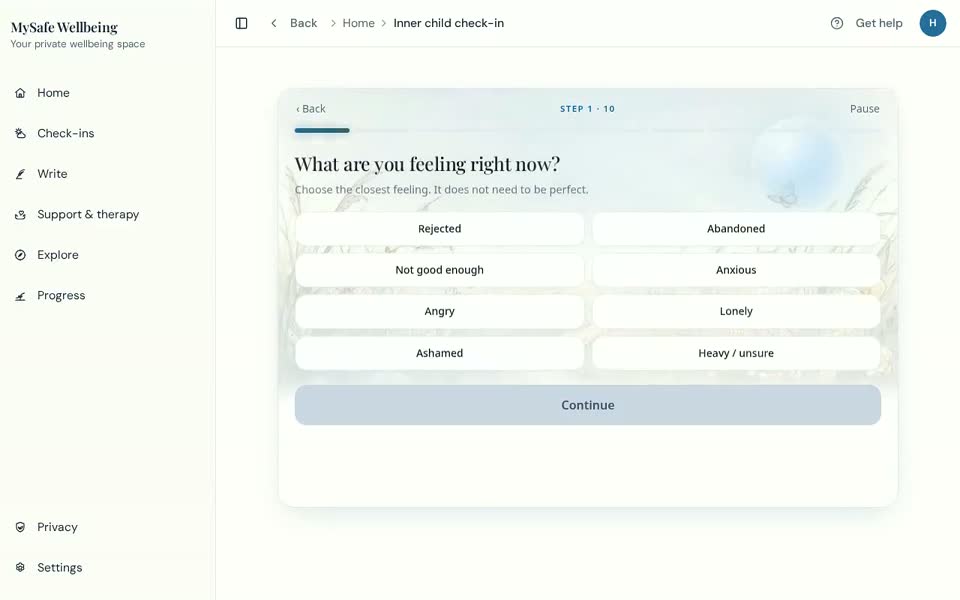
- **What feeling came up first?** Anxiety, shame, anger, sadness and more.
- **What happened, and what did my mind add?** The two are shown side by side.
- **How certain are you the story is true?** A slider helps you notice it is often less than 100%.
- **A kinder, more balanced view** and a small next step.
Why this helps
Seeing the facts and the story apart takes the heat out of a reaction. Over time you start to notice your common patterns, like expecting rejection, and catch them sooner.
When to get more support
If triggers keep affecting your relationships or work, a therapist can help you understand where these patterns come from. Our relationship counselling and anxiety therapy pages explain how.
A note on safety
These tools are for reflection and self-help. They are not a diagnosis, a replacement for therapy or crisis support. If you are in immediate danger, call 999 or Samaritans on 116 123.