Why Googling Symptoms Can Make Health Anxiety Worse
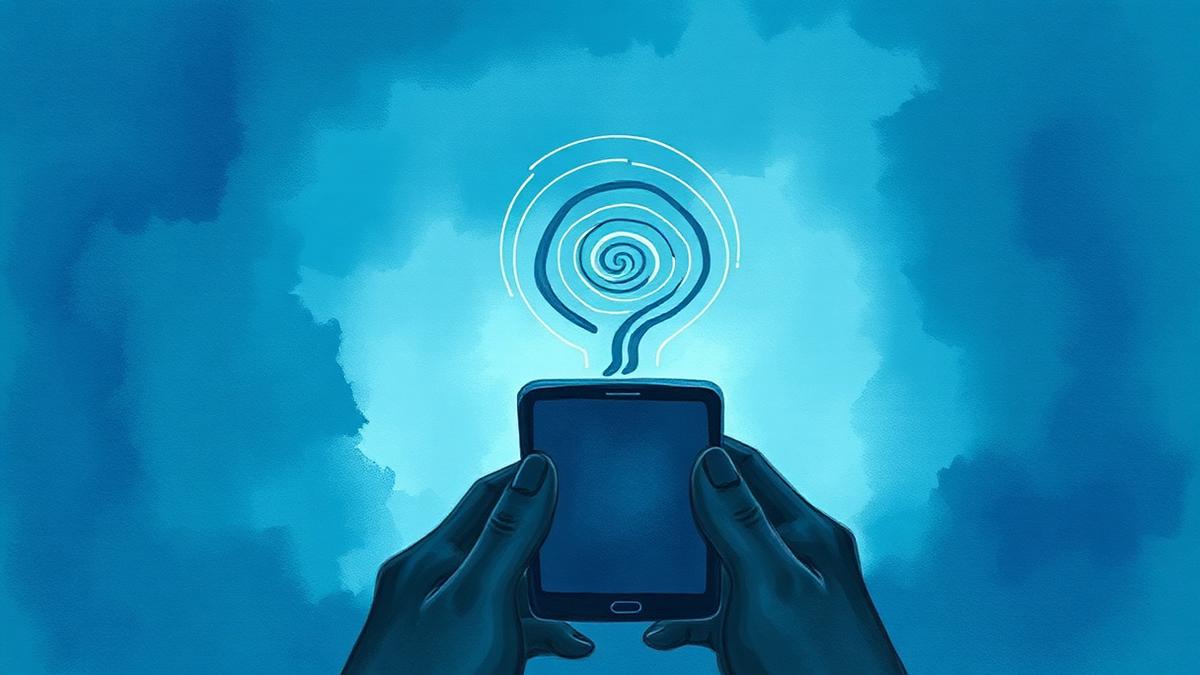
You notice an unfamiliar sensation in your body.
Perhaps your heart feels faster than usual. You have had a headache for a few days, feel slightly dizzy, or cannot explain why you are so tired.
You tell yourself that you will search online for a quick answer.
At first, you are looking for reassurance. Within minutes, however, you have moved from reading about common explanations to rare diseases, serious complications and frightening personal stories.
Your body suddenly feels more tense. You notice sensations that you had not noticed before. You search again, using slightly different words, hoping the next page will finally reassure you.
Instead, you feel worse.
If this pattern feels familiar, you are not being dramatic or irrational. You may be caught in a common health-anxiety cycle in which searching for certainty provides temporary relief but strengthens the fear over time.
What is health anxiety?
Health anxiety involves becoming excessively worried that you have, or may develop, a serious health condition.
Someone experiencing health anxiety may:
- Frequently check their body for lumps, pain or other changes
- Search repeatedly for symptoms and illnesses online
- Ask family members, friends or healthcare professionals for reassurance
- Worry that a doctor or medical test has missed something
- Closely monitor normal bodily sensations
- Avoid exercise or certain activities in case they are dangerous
- Avoid medical information because it feels too frightening
- Feel reassured briefly, only for the worry to return
The NHS identifies repeated body checking, reassurance seeking and looking at health information as behaviours that can maintain health anxiety. It recommends noticing how often these behaviours occur and gradually reducing them.
Health anxiety does not mean that physical symptoms are imaginary. Anxiety can produce very real bodily sensations, including changes in breathing, a faster heartbeat, muscle tension, nausea, dizziness, sweating and tightness in the chest.
The problem is not that you have invented the sensation. The problem is the meaning your anxious mind assigns to it.
A headache becomes evidence of a neurological condition. Tiredness becomes a sign of serious illness. A moment of dizziness becomes proof that something is dangerously wrong.
Why do we Google our symptoms?
Most people search because they want one of three things: an explanation, reassurance, or a clear answer about what to do next.
Searching can sometimes be helpful. Reliable health information may help you understand a diagnosis, prepare questions for a medical appointment or recognise when professional advice is needed.
The difficulty begins when searching is no longer about gathering useful information. It becomes an attempt to remove every trace of uncertainty.
Health anxiety asks questions that the internet cannot conclusively answer:
- What if this symptom is something serious?
- What if my doctor missed something?
- What if I am the rare exception?
- What if the test was done too early?
- What if this article does not include my exact situation?
No webpage can give complete certainty about what is happening inside an individual person's body. As a result, each answer creates another question.
The health-anxiety search cycle
The cycle often looks like this:
- You notice a sensation. You may feel a pain, flutter, pressure, twitch, change in appetite or another unfamiliar bodily experience.
- Your mind interprets it as dangerous. Instead of thinking, "There could be many reasons for this," the mind jumps to the most frightening explanation.
- You search online, hoping to prove that nothing serious is wrong.
- You find alarming information. A serious condition may appear in the search results, even when it is an unlikely explanation.
- Your anxiety rises. Your heart rate may increase, your muscles may tighten and your breathing may change.
- You notice more sensations. The physical effects of anxiety now feel like additional evidence that something is wrong.
- You search again — changing the wording, reading another article, comparing symptoms or looking through online forums.
- You experience brief relief or greater fear. Even a reassuring answer may only help for a few minutes or hours.
- The doubt returns. You think, "But what if this source is wrong?"
- The search begins again.
Research has consistently found an association between health anxiety and repeated online health-information seeking. A systematic review and meta-analysis involving 20 studies found positive relationships between health anxiety, online health searching and cyberchondria. This does not mean that every health search is harmful, but it suggests that searching can become particularly distressing for people who are already worried about illness.
What is cyberchondria?
The word cyberchondria is used by researchers to describe excessive or repeated online searching for health information that increases distress or health anxiety.
It is not simply looking up a symptom once. It is a pattern in which searching:
- Becomes difficult to stop
- Takes up increasing amounts of time
- Produces more fear than useful information
- Interferes with work, sleep or relationships
- Leads to further checking and reassurance seeking
- Continues even though you know it usually makes you feel worse
Cyberchondria is not currently a separate formal mental-health diagnosis. It is a useful term for describing an anxiety-amplifying behaviour associated with health anxiety, difficulty tolerating uncertainty and repeated reassurance seeking.
Seven reasons Googling symptoms can make anxiety worse
1. Search results cannot assess your individual circumstances
A search engine sees the words you enter. It does not see your full medical history, age, medication, recent test results, lifestyle or the context in which your symptoms developed.
Two people can experience a similar sensation for completely different reasons. Online information is general. Medical assessment is individual.
A webpage may describe a symptom accurately, but it cannot examine you, ask follow-up questions or understand how several pieces of information fit together.
2. Serious explanations attract your attention
When you are anxious, your mind becomes highly alert to threat.
You may scroll past ten ordinary explanations and focus on the one serious condition listed at the bottom. This is not because the serious explanation is necessarily the most likely. It is because it is the one your anxious brain considers most important.
You may then begin matching yourself to the condition: "I have two of those symptoms." "That person was also told not to worry." "The article says it can sometimes begin mildly."
The more frightened you become, the more convincing the feared explanation can feel.
3. Online information often lacks probability and context
A symptom may technically be associated with hundreds of conditions. That does not mean each condition is equally likely.
Search results often tell you what is possible without helping you understand what is probable in your particular situation.
Health anxiety tends to collapse this difference. "Possible" begins to feel like "likely". "Rare" begins to feel like "it could still happen to me".
The internet can provide a list of potential causes, but it cannot calculate your personal risk from a symptom alone.
4. Searching gives only temporary reassurance
You might find an article that says your symptom is commonly related to stress, poor sleep or another non-serious cause. For a moment, you feel calmer.
Then another thought appears: What if mine is different? What if I overlooked an important symptom? What if the article is unreliable? What if the illness is at an early stage? What if I should search one more time?
Searching has reduced the anxiety temporarily, so your brain learns that checking is how you stay safe. The next time anxiety appears, the urge to search becomes stronger.
This is how reassurance can unintentionally maintain anxiety. It removes discomfort in the moment without helping you learn that you can tolerate uncertainty without checking.
5. Anxiety creates additional physical sensations
When your brain believes you are in danger, your nervous system prepares your body to respond. You may experience:
- A racing or pounding heart
- Tightness in the chest
- Faster or shallower breathing
- Light-headedness, tingling or nausea
- Muscle tension, sweating or shaking
- Difficulty concentrating, or feeling disconnected and unreal
These symptoms are genuine. However, when you are already afraid of illness, they can be interpreted as further evidence of a medical emergency.
Anxiety creates a sensation. The sensation creates more anxiety. The cycle feeds itself.
NHS health-anxiety resources describe this interaction between frightening thoughts, bodily sensations, checking and reassurance-seeking behaviours.
6. Conflicting information increases uncertainty
One article tells you that a symptom is usually harmless. Another says it should never be ignored. An online forum contains a story about someone whose diagnosis was initially missed.
You continue reading because you want to resolve the contradiction. Instead, you collect more possibilities, more exceptions and more frightening stories.
The search that began as an attempt to reduce uncertainty gives you even more uncertainty to manage.
7. You begin monitoring your body more closely
After reading a list of symptoms, you may start checking whether you have them.
You repeatedly examine the same part of your body. You test your balance, breathing, eyesight, memory or heart rate. You compare one side of your body with the other. You take photographs or measurements to track changes.
The more attention you give a sensation, the more noticeable it becomes. Normal fluctuations that you previously would not have registered can begin to feel significant. This can make the feared condition seem increasingly real.
Does this mean you should never search for health information?
No.
The aim is not to ignore your body, avoid healthcare or assume every symptom is caused by anxiety. New, persistent, worsening or concerning symptoms deserve appropriate medical advice. Anxiety and physical health conditions can also exist at the same time.
The goal is to recognise the difference between responsible information seeking and compulsive reassurance seeking.
Responsible information seeking usually has a clear purpose. You consult a reliable source, decide what action is appropriate and then stop. Anxiety-driven searching feels urgent and repetitive. It rarely leads to a settled decision. Instead, it creates another round of checking.
Ask yourself:
- Am I searching for practical guidance or complete certainty?
- Have I already read this information several times?
- Do I feel calmer in a lasting way, or only briefly relieved?
- Am I gathering information for an appointment, or trying to diagnose myself?
- Is this search helping me make a decision?
- Do I usually feel better or worse after searching?
How to stop Googling symptoms compulsively
Pause before opening the search bar
When you feel the urge to search, wait for ten minutes. During that time, notice what is happening: What sensation did I notice? What am I afraid it means? How anxious do I feel from zero to ten? What am I hoping the search will give me?
The aim is not to force the fear away. It is to create a small gap between the anxious thought and the checking behaviour. As this becomes easier, gradually extend the delay.
Keep a record of your searches
Write down the symptom you noticed, the condition you feared, how long you searched, your anxiety level before searching, immediately afterwards and an hour later, and whether the search changed what you needed to do.
You may discover that searching provides a short drop in anxiety followed by a larger increase.
The NHS recommends keeping track of body checking, reassurance seeking and health-information searching, then gradually reducing these behaviours.
Choose one reliable source
When health information is genuinely needed, choose one trusted source, such as the NHS website or guidance provided by your healthcare professional.
Avoid moving repeatedly between search engines, social-media posts, forums and personal stories. Personal experiences can feel compelling, but another person's experience cannot diagnose your symptoms.
Set a clear limit
Before searching, decide: What question am I trying to answer? Which source will I use? How long will I spend? What action will I take when I finish?
For example: "I will use the NHS website for ten minutes to decide whether I need routine, urgent or emergency medical advice. I will not continue searching once I have made that decision."
Avoid searching when your anxiety is at its highest
When you are extremely anxious, you are more likely to interpret ambiguous information as threatening.
Regulate your body first. Place both feet on the floor. Relax your shoulders. Slow your breathing without forcing it. Name five things you can see and four things you can feel. Allow the intensity of the anxiety to reduce before deciding what you need to do.
Practise a balanced response
Instead of telling yourself, "There is definitely nothing wrong," try:
- "I have noticed a symptom, and I do not yet know what it means."
- "There may be several explanations."
- "I can seek appropriate medical advice without diagnosing myself online."
- "I am feeling anxious, but anxiety is not proof of danger."
- "I do not need complete certainty before I step away from the search."
A balanced response acknowledges both your symptom and the uncertainty around it.
Reduce body checking gradually
Stopping every checking behaviour at once may feel overwhelming. Begin with one behaviour.
You might decide not to check the same area of your body more than once a day, stop photographing a symptom repeatedly or reduce how often you ask someone else for reassurance.
The aim is to teach your brain that not checking does not create danger.
When should you speak to a doctor?
Health-anxiety support should never be used to dismiss physical symptoms.
Speak to a GP or another appropriate healthcare professional when you have a new, persistent, worsening or concerning symptom, or when you are unsure whether medical assessment is needed.
For urgent medical concerns in England, NHS 111 can advise you about what to do next. In a life-threatening emergency, call 999 or attend A&E.
Try to avoid repeatedly consulting multiple professionals about the same concern solely to obtain certainty. Where possible, work with one GP or clinical team who can understand the wider pattern and agree a clear plan with you.
When should you seek help for health anxiety?
Consider professional support when health worries:
- Take up a significant part of your day
- Affect your sleep, concentration or relationships
- Lead to repeated searches, appointments or body checking
- Prevent you from exercising, travelling or enjoying daily life
- Continue despite medical reassurance
- Shift from one feared illness to another
- Make you feel unable to trust your body
- Cause frequent panic or distress
Cognitive behavioural therapy can help people recognise the thoughts and behaviours that maintain health anxiety. Therapy may involve reducing checking and reassurance seeking, exploring catastrophic interpretations, building tolerance for uncertainty and learning a different way to respond to bodily sensations.
In England, adults can self-refer to NHS Talking Therapies for many anxiety-related difficulties without first speaking to a GP. Private therapy is also available for people who would prefer greater flexibility or a particular therapeutic approach.
How MySafeTherapy can help
Health anxiety can leave you feeling as though you must choose between ignoring your symptoms and constantly monitoring them. Therapy offers another option.
A qualified therapist can help you explore what triggers your health fears, why uncertainty feels so difficult to tolerate, how online searching affects your anxiety, the relationship between stress and physical sensations, patterns of checking and reassurance seeking, past experiences of illness, loss or medical trauma, and ways to respond to symptoms without immediately catastrophising.
You can read more on our [health anxiety therapy page](/health-anxiety-therapy).
The goal is not to convince you that nothing bad could ever happen. No person can have that guarantee. The goal is to help you live without needing to investigate every sensation, eliminate every uncertainty or prepare for every possible illness.
You can take your health seriously without allowing fear to control your life.
Are health worries taking over your day? Speak with a qualified MySafeTherapy therapist and begin changing the cycle of searching, checking and temporary reassurance.
Frequently asked questions
Is Googling symptoms always harmful?
No. Online health information can be useful when it comes from a reliable source and helps you make a practical decision. It becomes unhelpful when searching is repetitive, increases distress or is being used to obtain certainty that the internet cannot provide.
Why do I keep Googling symptoms when I know it makes me anxious?
Searching may provide brief reassurance. This teaches your brain that checking is necessary to reduce fear. When the anxiety returns, you feel driven to search again. Over time, the habit can become increasingly difficult to resist.
Can anxiety cause real physical symptoms?
Yes. Anxiety can affect breathing, heart rate, digestion, muscle tension, concentration and other bodily processes. However, you should not automatically assume that a new or concerning symptom is caused by anxiety. Seek appropriate medical advice when needed.
What is cyberchondria?
Cyberchondria is a research term describing repeated or excessive online health searching that increases anxiety or distress. It is not a formal standalone diagnosis.
Should I stop checking my symptoms completely?
The most appropriate approach depends on your medical needs and the severity of your anxiety. Many people find it more manageable to reduce reassurance-seeking and checking gradually while following an agreed medical plan.
Can therapy help with health anxiety?
Yes. Therapy can help you understand your triggers, challenge catastrophic interpretations, reduce checking and reassurance seeking, and become more comfortable with uncertainty. The NHS lists talking therapies, including CBT, as a treatment option for health anxiety.
This article is for general educational purposes and is not a substitute for medical assessment, diagnosis or treatment. Do not use online information to diagnose yourself or delay seeking necessary medical care.